Most people expect pregnancy to come with hot flashes, not goosebumps. So if you’ve been reaching for a sweater while everyone else in the room is comfortable, it’s fair to wonder if something’s off.
Yes, it’s possible to feel cold when pregnant, even though pregnancy hormones more commonly raise body temperature. Mild chilliness is often linked to shifting blood pressure, circulation changes, or low energy intake, and it’s usually harmless. Persistent or severe cold, especially with fatigue, dizziness, or fever, is worth mentioning to your provider, since it can point to anemia, a thyroid imbalance, or infection.
Below, we’ll walk through why this happens, which causes are simply part of pregnancy, which ones deserve a phone call to your doctor, and what actually helps when you can’t seem to warm up.
Why Pregnancy Usually Makes People Feel Warmer
Pregnancy raises your resting body temperature for a reason. Rising progesterone increases your metabolic rate, your blood volume expands by roughly 30–50% by the third trimester, and more blood flows to your skin to help dissipate heat. That combination is why hot flashes, night sweats, and feeling overheated are the more commonly reported experience.
Feeling cold instead is the less typical pattern, but it isn’t rare, and it isn’t automatically a red flag. Your circulatory system doesn’t ramp up its blood volume overnight; it’s a gradual build over the first trimester. Until it catches up, some people notice cooler hands, feet, or a general chill, particularly early on.
Normal, Usually Harmless Reasons You Feel Cold
These causes explain most of the mild, occasional chilliness reported in the first trimester.
Blood Pressure Naturally Dips Early On
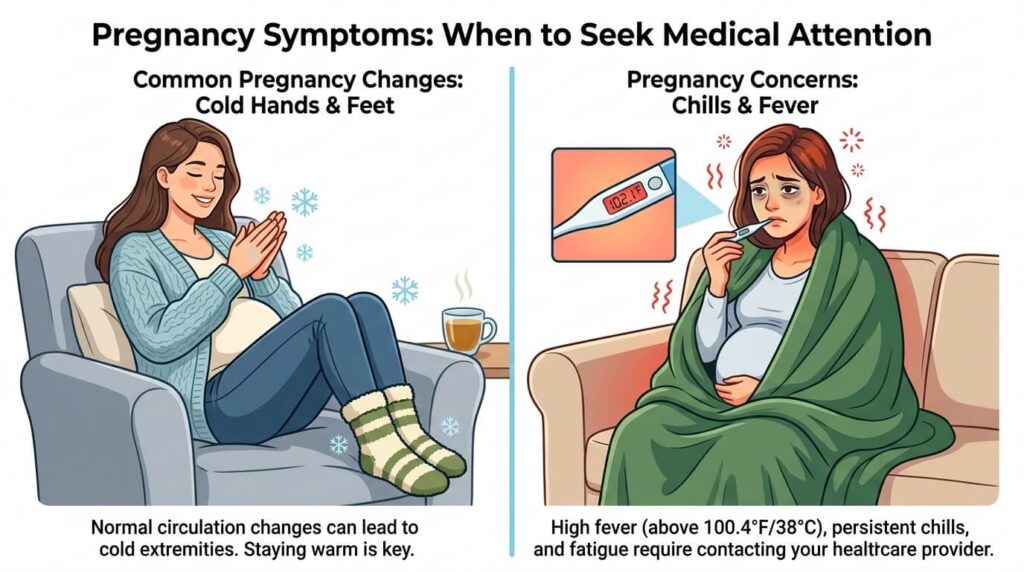
As blood vessels relax to accommodate increased blood flow, blood pressure commonly drops slightly in the first trimester. A modest dip can leave you feeling cold, lightheaded, or shivery, especially when you stand up quickly.
Circulation Is Still Catching Up
Blood volume expansion is a gradual process. Early on, circulation to your extremities may lag, which is why cold hands and feet are one of the most frequently reported early pregnancy symptoms.
Hormonal Shifts Affect Blood Vessels
Estrogen and progesterone both influence how blood vessels expand and contract. As these hormones fluctuate sharply in the first trimester, that vascular shift can translate into intermittent cold sensations.
You’re Running on Less Fuel
Nausea, food aversions, and appetite changes are common in early pregnancy, and skipping meals or under-eating can leave your body with less energy to maintain a steady temperature. Fatigue from disrupted sleep compounds the effect, since poor sleep interferes with your body’s thermoregulation.
Causes That Need a Closer Look
These are less common, but they’re the reasons a provider will typically want to rule out if coldness is persistent, severe, or paired with other symptoms.
Iron-Deficiency Anemia
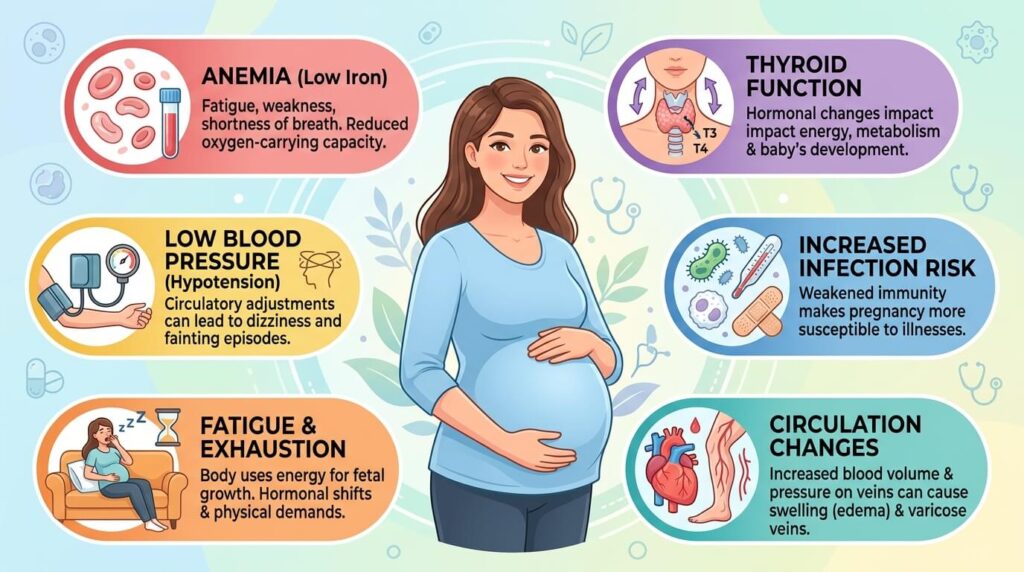
Pregnancy increases your iron requirements to build extra red blood cells for you and your baby. When intake doesn’t keep pace, anemia can develop, and cold hands and feet are a classic symptom, alongside fatigue, shortness of breath, paleness, and heart palpitations. Routine prenatal bloodwork typically screens for this at your booking appointment and again later in pregnancy.
Hypothyroidism (Underactive Thyroid)
Your thyroid regulates metabolism and body heat, so an underactive thyroid can produce persistent cold intolerance. Other signs include fatigue, unexplained weight gain, dry skin, constipation, and low mood. Because several of these overlap with ordinary pregnancy symptoms, hypothyroidism is easy to miss without a blood test, but it’s important to catch: untreated thyroid disease in pregnancy has been linked to complications including preeclampsia and preterm birth, which is exactly why it’s treatable and monitored closely once identified.
Infection or Fever
A true fever (100.4°F/38°C or higher) can sometimes present as chills before the temperature spike itself is noticeable. If cold or shivering shows up alongside body aches, burning with urination, or a fever, contact your provider promptly, since some infections need prompt evaluation during pregnancy.
Anxiety and Panic Symptoms
Anxiety is common in pregnancy, and panic attacks can bring on cold, clammy sensations alongside a racing heart, shortness of breath, or dizziness. These episodes are unpleasant but not dangerous, and support is available; you don’t need to manage it alone.
Normal vs. Needs-a-Check-In: Quick Comparison
| Cause | How it typically feels | Common companion symptoms | What to do |
|---|---|---|---|
| Blood pressure dip | Mild, comes and goes, worse on standing | Lightheadedness | Rise slowly; mention at next visit |
| Circulation catching up | Cold hands/feet, especially first trimester | None significant | Layer clothing; usually resolves |
| Under-eating/fatigue | General chilliness, low energy | Tiredness, hunger | Eat regularly; prioritize sleep |
| Iron-deficiency anemia | Persistent, whole-body cold | Fatigue, paleness, breathlessness | Ask for a blood test |
| Hypothyroidism | Persistent, alongside weight/mood changes | Dry skin, constipation, low mood | Ask for thyroid panel |
| Infection/fever | Sudden chills or shivering | Aches, fever, urinary symptoms | Contact provider same day |
| Anxiety/panic | Sudden, short episodes | Racing heart, dread, dizziness | Talk to provider; support is available |
Does Feeling Cold Change by Trimester?
Cold sensitivity is reported most often in the first trimester, when blood volume hasn’t fully expanded and nausea can limit eating. By the second trimester, most people shift toward feeling warmer as circulation increases. If chills reappear later in pregnancy, it’s worth mentioning at your next appointment, since new-onset symptoms in later trimesters are evaluated differently than early ones.
How to Stay Comfortable
- Layer instead of over-bundling. Add or remove a cardigan, socks, or blanket as needed rather than cranking the heat, which can make you feel sluggish.
- Eat on a schedule. Small, regular meals with protein and iron-rich foods (lean meat, beans, leafy greens) help stabilize both energy and temperature.
- Stay hydrated. Dehydration can worsen both dizziness and cold sensitivity.
- Move a little. A short walk or gentle stretching improves circulation.
- Protect your sleep. A supportive pregnancy pillow can help you get the rest your body needs to regulate temperature properly.
- Warm from the inside. Caffeine-free herbal tea or warm water with lemon can help without the stimulant load of coffee.
When to Call Your Doctor
Reach out to your midwife or OB if cold sensations are:
- Persistent or severe rather than occasional
- Paired with a fever, chills, or flu-like symptoms
- Accompanied by dizziness, fainting, or a racing heart
- Showing up alongside fatigue, pale skin, or shortness of breath
- Combined with unexplained weight gain, dry skin, or low mood
None of these symptoms mean something is definitely wrong, but they’re exactly what a quick blood test or check-up can rule in or rule out.
The Takeaway
Feeling cold when pregnant is a real, fairly common experience, most often tied to the ordinary business of your circulatory system catching up with your changing hormones. It’s rarely dangerous on its own. But because cold intolerance can also be an early signal of anemia, thyroid imbalance, or infection, persistent or severe chills are worth flagging at your next prenatal visit rather than waiting it out.
If you’re tracking symptoms like this throughout your pregnancy, Pregnancy Count pregnancy symptom tracker can help you spot patterns worth discussing with your provider, and our complete guide to first trimester symptoms covers what else is normal in these early weeks.

FAQ
Q: Is it normal to feel cold in early pregnancy?
A: Yes. Mild cold sensitivity, especially in the hands and feet, is common in the first trimester while blood volume and circulation are still adjusting. It typically isn’t a sign of a problem on its own.
Q: Why do I feel cold instead of hot when pregnant?
A: Most people feel warmer due to rising progesterone and increased blood flow to the skin. Some people feel cold instead because blood pressure can dip early on, circulation hasn’t fully expanded yet, or energy intake is lower due to nausea and appetite changes.
Q: Can feeling cold be a sign of miscarriage?
A: Feeling cold on its own is not a recognized sign of miscarriage. Miscarriage symptoms typically involve bleeding and cramping; if you’re worried about those symptoms specifically, contact your provider rather than relying on temperature changes alone.
Q: What deficiency causes you to feel cold in pregnancy?
A: Iron-deficiency anemia is the most common nutritional cause, since low red blood cell counts reduce oxygen delivery throughout the body. Routine prenatal bloodwork screens for this.
Q: Should I worry if I feel cold and shivery while pregnant?
A: Occasional mild chills usually aren’t concerning. Shivering paired with a fever, body aches, or other infection symptoms should prompt a same-day call to your provider, since fevers in pregnancy need timely evaluation.
Q: Does feeling cold in pregnancy go away?
A: For most people, yes. As blood volume expands and the body fully adjusts, many notice the chill eases by the second trimester, though new symptoms can appear at any stage.
Q: Does feeling cold mean I’m having a boy or a girl?
A: No. There’s no scientific link between feeling cold and your baby’s sex; temperature changes reflect your own circulation and hormones, not fetal sex.