
You’re standing in your kitchen at 7 a.m., exhausted, nauseous, and staring at your coffee maker. You’ve just found out you’re pregnant — and suddenly that everyday cup of coffee feels like a moral dilemma.
You’re not alone. This is one of the very first questions most newly pregnant women ask their doctors. And honestly? The answer is more nuanced than a simple yes or no.
Can you drink coffee while pregnant? According to most major medical organizations, moderate caffeine consumption — generally up to 200 milligrams (mg) per day — is considered acceptable during pregnancy. But “acceptable” doesn’t mean “without risk,” and the details matter a lot more than most articles tell you.
This guide breaks down everything you need to know: the current guidelines, how caffeine actually affects your developing baby, trimester-specific considerations, the hidden sources of caffeine that catch people off guard, and practical strategies if you want to cut back.
What the Medical Guidelines Actually Say
Let’s start with the official word, because this is where a lot of confusion begins.
The American College of Obstetricians and Gynecologists (ACOG) recommends limiting caffeine intake to fewer than 200 mg per day during pregnancy. This is not a new guideline — it has been consistent for years and is based on a review of multiple observational studies.
The World Health Organization (WHO) recommends a similar limit: 300 mg per day or less, though many practitioners prefer the more conservative 200 mg threshold.
The NHS (UK) advises pregnant women to stay under 200 mg of caffeine per day, including caffeine from tea, cola, energy drinks, and food sources like chocolate.
The American Pregnancy Association echoes the 200 mg recommendation and emphasizes that some healthcare providers advise cutting caffeine out entirely during the first trimester when the risk of miscarriage is highest.
Here’s the honest truth: no amount of caffeine has been proven 100% safe in pregnancy. The 200 mg guideline is a risk-reduction threshold based on available evidence — not a green light. That distinction is worth remembering.
Why Caffeine During Pregnancy Is More Complicated Than You Think
Caffeine feels like a harmless everyday substance. Most of us have been drinking it since our teens. But pregnancy changes everything about how your body handles it.
Your Body Metabolizes Caffeine Much More Slowly When Pregnant
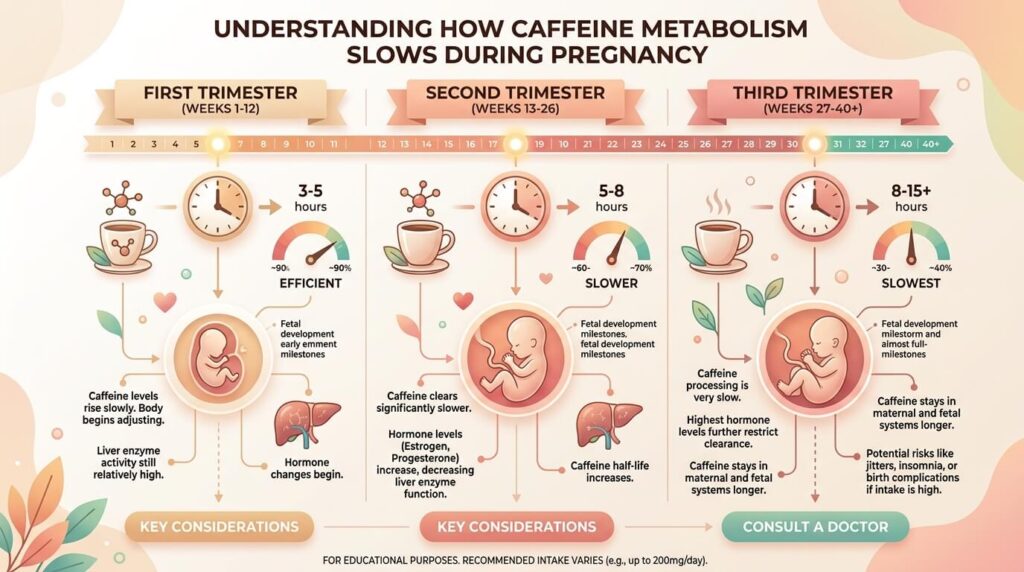
Under normal circumstances, your liver breaks down caffeine relatively quickly. But during pregnancy — especially in the second and third trimesters — the enzyme responsible for metabolizing caffeine (CYP1A2) becomes significantly less active. This means caffeine stays in your bloodstream two to three times longer than usual.
In practical terms: a cup of coffee that would clear your system in about 5 hours before pregnancy might take 10–15 hours to clear during your third trimester.
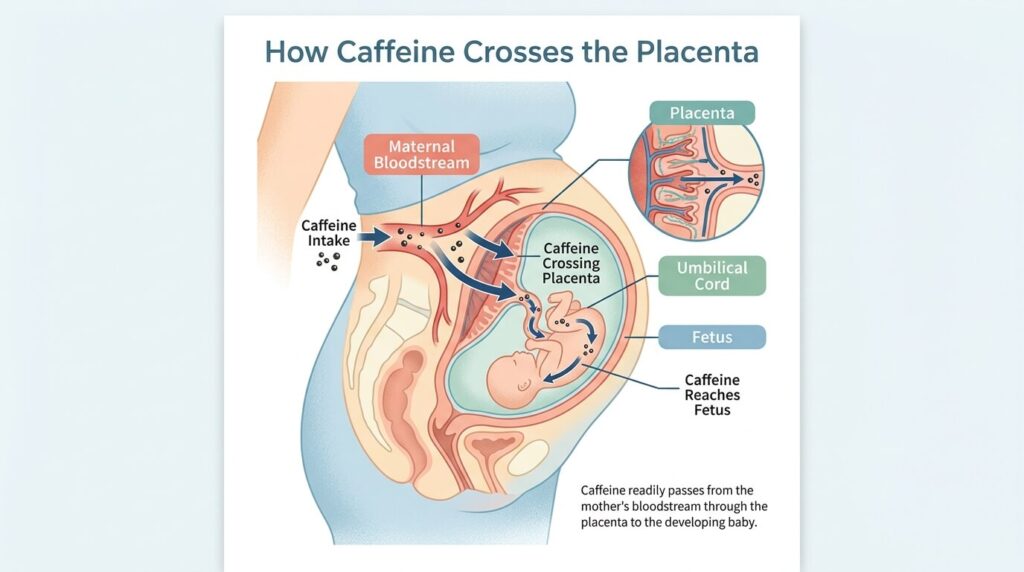
Caffeine Crosses the Placenta — and Your Baby Can’t Break It Down
This is the crux of the concern. Caffeine passes freely through the placenta. Once it reaches your baby, the fetal liver — which is still developing — has virtually no ability to metabolize caffeine. That means caffeine and its byproducts can accumulate in fetal tissue at concentrations higher than in your own blood.
The fetus is exposed to caffeine for far longer and at higher relative concentrations than you are. That’s why even a moderate intake in the mother can have disproportionate effects on fetal development.

What Caffeine Does Inside the Womb
Research has linked higher caffeine intake during pregnancy to several outcomes, though establishing direct causation is difficult:
- Fetal growth restriction: Some studies suggest caffeine may cause blood vessels to constrict, including those supplying the placenta, potentially reducing nutrient and oxygen delivery to the fetus.
- Increased miscarriage risk: Multiple studies have found an association between caffeine consumption above 200 mg/day and elevated miscarriage risk, particularly in the first trimester.
- Low birth weight: A review of studies published in BMJ found an association between caffeine consumption and reduced birth weight, even at intakes below 200 mg/day.
- Preterm birth: Evidence here is mixed, but some data suggests higher caffeine intake may be associated with slightly elevated risk.
- Sleep disruption in the newborn: Babies of mothers who consumed more caffeine during pregnancy may experience altered sleep patterns in the newborn period.
It’s important to note that many of these studies are observational — they track what happens in populations rather than proving caffeine directly caused specific outcomes. Women who consume more caffeine may also have other lifestyle differences. Still, the associations are consistent enough that caution is warranted.
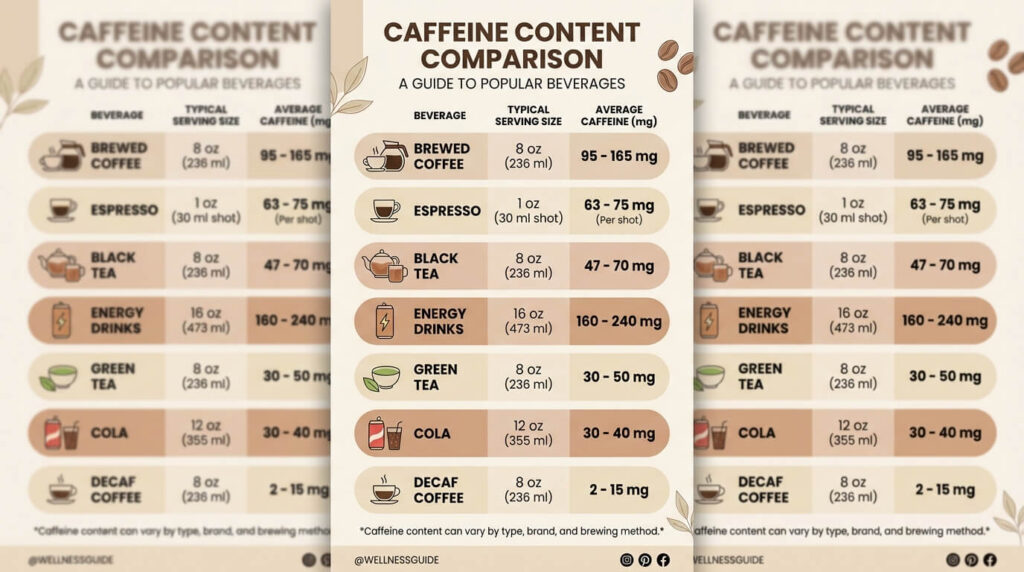
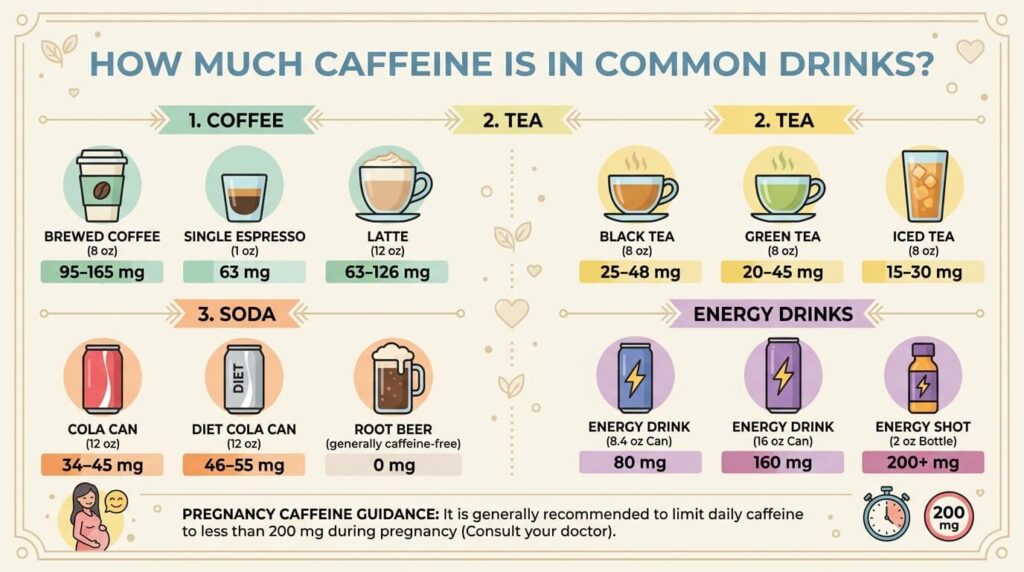
How Much Caffeine Is in Common Foods and Drinks?
The 200 mg limit sounds clear until you realize how many foods and drinks contain caffeine — and how much variation there is even within the same category.
Caffeine Content Comparison Table
| Source | Serving Size | Approximate Caffeine |
|---|---|---|
| Brewed coffee (drip) | 8 oz (240 ml) | 95–165 mg |
| Espresso | 1 shot (1 oz) | 60–75 mg |
| Americano | 8 oz | 60–120 mg |
| Instant coffee | 8 oz | 30–90 mg |
| Decaf coffee | 8 oz | 2–15 mg |
| Black tea | 8 oz | 40–70 mg |
| Green tea | 8 oz | 20–45 mg |
| Matcha | 8 oz prepared | 60–80 mg |
| Cola (regular) | 12 oz | 30–45 mg |
| Energy drink | 8 oz | 70–200 mg |
| Dark chocolate | 1 oz | 12–25 mg |
| Milk chocolate | 1 oz | 5–10 mg |
| Chocolate ice cream | 1 cup | 5–30 mg |
| Pre-workout supplements | 1 serving | 150–300 mg |
| Some headache medications | 1 tablet | 60–130 mg |
A few important takeaways from this table:
Coffee varies wildly. A “small” coffee at a specialty café can easily contain more caffeine than a “large” at a fast food chain. Always ask or check labels when possible.
Decaf is not caffeine-free. Even decaffeinated coffee contains small amounts of caffeine — typically 2–15 mg per cup. If you’re drinking several cups of decaf per day, it can add up.
Energy drinks are a serious risk. Many energy drinks contain 150–300 mg of caffeine per serving — and some servings are listed as “two per can.” A single energy drink can wipe out your entire daily limit or exceed it significantly. Energy drinks are best avoided entirely during pregnancy.
Supplements and medications sneak caffeine in. Some cold medicines, pain relievers (especially headache formulas), and pre-workout supplements contain substantial amounts of caffeine. Always check ingredients on anything you take during pregnancy.
Trimester-by-Trimester: Does Timing Matter?
Yes — and most articles skim over this.
First Trimester (Weeks 1–12): The Highest-Risk Window
The first trimester is when organ development is most rapid and the embryo is most vulnerable. Miscarriage risk is also at its peak during this period — and some research suggests this risk increases with caffeine intake.
Some OB-GYNs and midwives advise patients to minimize or eliminate caffeine entirely during the first trimester, even if they plan to reintroduce moderate amounts later. If you’re struggling with severe first-trimester nausea, you may find coffee unappealing anyway — which is your body doing you a favor.
Second Trimester (Weeks 13–26): Metabolism Slows Down
Here’s something most guides don’t mention: your ability to metabolize caffeine actually decreases as pregnancy progresses. During the second trimester, caffeine clearance takes roughly twice as long as normal. The 200 mg guideline remains relevant, but your body is becoming progressively less efficient at clearing caffeine.
Third Trimester (Weeks 27–40): Slowest Clearance
By the third trimester, caffeine metabolism can be three times slower than pre-pregnancy baseline. The fetus is also more responsive to stimulants at this stage, and some research suggests caffeine may affect fetal heart rate and sleep patterns in utero.
If you’ve been maintaining a 200 mg limit throughout pregnancy, that same intake is having a more prolonged physiological effect in your third trimester than it did in your first.
Practical Strategies for Reducing (or Quitting) Caffeine During Pregnancy
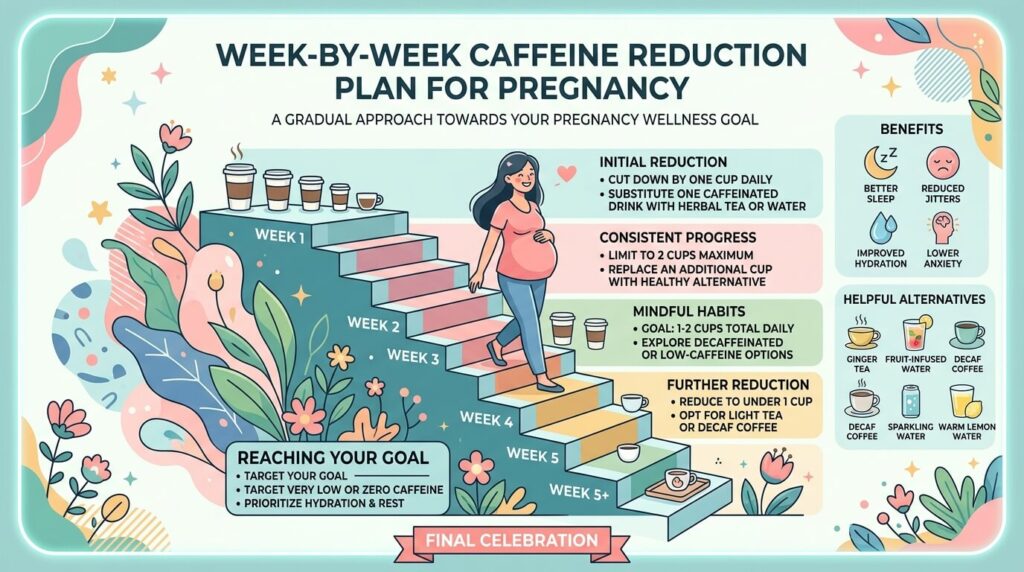
If you decide to cut back — or quit entirely — doing it gradually is key. Abrupt caffeine withdrawal can cause severe headaches, fatigue, and irritability, which is the last thing you need when you’re already pregnant.
Step-by-Step Caffeine Reduction Plan
Week 1: Track your current caffeine intake for 3–4 days using the table above. Establish your baseline.
Week 2: Reduce by 25%. If you drink 300 mg per day, drop to 225 mg. Replace one caffeinated drink with a decaf version.
Week 3: Reduce by another 25% from your original baseline. At this point you’re likely below the 200 mg guideline.
Weeks 4 and beyond: Continue gradual reduction if you want to eliminate caffeine entirely, dropping by another 25–50 mg every week.
Timing Tricks That Help
- Shift your coffee to later in the morning. Cortisol (your natural alertness hormone) peaks shortly after waking. Drinking coffee during that peak window means you’re fighting biology. Waiting until 90–120 minutes after waking — when cortisol naturally dips — makes coffee more effective at a lower dose.
- Switch from brewed to instant. Instant coffee typically has 30–90 mg per cup versus 95–165 mg for drip. Same ritual, less caffeine.
- Make your cup weaker, not smaller. Some people find reducing concentration easier than reducing volume.
Caffeine Alternatives That Actually Work
- Rooibos tea – Naturally caffeine-free, rich in antioxidants, slightly earthy flavor that pairs well with milk.
- Herbal teas – Ginger, peppermint, and lemon balm are generally considered safe and may also help with pregnancy nausea.
- Warm lemon water – Triggers alertness through a different mechanism (sensory stimulation rather than stimulant).
- Half-caf blends – Mix regular and decaf coffee in equal proportions for 50% less caffeine with no change in ritual.
- Chicory root coffee – Tastes remarkably similar to coffee, caffeine-free, and safe during pregnancy.
Important: Not all herbal teas are safe during pregnancy. Avoid teas containing licorice root, pennyroyal, blue cohosh, or high-dose chamomile. Always verify with your healthcare provider before trying any herbal product.
Common Mistakes Pregnant Women Make With Caffeine
Even well-intentioned women can go over their limits without realizing it. Here are the most frequent errors.
1. Forgetting about tea. Many women switch from coffee to tea assuming it’s caffeine-free. A strong black tea can contain 70 mg per cup. Three cups throughout the day puts you at 210 mg — already over limit.
2. Underestimating coffee shop drinks. A 16 oz (grande) brewed coffee from a large chain can contain 300–330 mg of caffeine — 1.5 times the entire daily limit in a single drink.
3. Ignoring chocolate cravings. Dark chocolate in particular can be a meaningful caffeine source, especially if you’re eating it multiple times per day in pregnancy.
4. Not accounting for medications. Excedrin (a common headache medication) contains 65 mg of caffeine per tablet. Two tablets = 130 mg before you’ve had a single beverage.
5. Treating decaf as caffeine-free. Multiple cups of decaf throughout the day can contribute 30–60 mg of caffeine in total.
6. Not adjusting for body weight or sensitivity. The 200 mg guideline is population-level guidance. Smaller women, or women who were low caffeine consumers before pregnancy, may be more sensitive to lower doses.
What If You’ve Already Had Too Much Caffeine?
First: don’t panic. Pregnancy is not a zero-tolerance situation, and occasional higher exposure on isolated days is unlikely to cause lasting harm. The concern with caffeine is chronic, habitual intake — not a one-time mistake.
If you realize you’ve gone over 200 mg on a particular day:
- Note it and move on.
- Don’t try to “make up for it” by having zero caffeine the next day if you’re a habitual consumer — the withdrawal headache won’t help you.
- Going forward, track your intake more carefully.
- If you’re consistently going over the limit and struggling to cut back, talk to your OB or midwife. They’ve heard it before and can help without judgment.
Should Some Women Avoid Caffeine Entirely?
The 200 mg threshold is appropriate guidance for low-risk pregnancies. But certain circumstances may warrant eliminating caffeine entirely. Discuss this with your provider if you:
- Have had a previous miscarriage or multiple miscarriages
- Are carrying multiples (twins, triplets)
- Have been diagnosed with placental insufficiency or growth restriction in a prior pregnancy
- Have high blood pressure or a history of preeclampsia
- Are taking medications that interact with caffeine (some antidepressants and antibiotics slow caffeine metabolism)
In these situations, the generally “safe” limit may not be the right limit for you specifically.
Does Caffeine Affect Breastfeeding?
This question often gets lumped into the pregnancy conversation, so let’s address it clearly.
Breastfeeding changes the calculation meaningfully. Caffeine does pass into breast milk — but at much lower concentrations than during pregnancy. Most of what you drink stays in your bloodstream and doesn’t make it into milk. The general guidance from lactation experts is that up to 300 mg of caffeine per day is considered compatible with breastfeeding for most women.
That said, newborns (especially premature newborns) metabolize caffeine very slowly. If you notice your newborn is particularly fussy, jittery, or having sleep difficulties, caffeine may be worth temporarily eliminating to see if it helps.
As babies grow past 3–6 months, they become much better at processing caffeine, and its effects on them decrease.
The Emerging Research You Should Know About
Science on caffeine and pregnancy continues to evolve. Some newer research worth knowing:
A 2020 systematic review in BMJ Evidence-Based Medicine examined over 1,200 studies and concluded that there may be no safe level of caffeine during pregnancy, and called for stronger public health messaging. This review was controversial — it has been criticized for conflating correlation and causation — but it raised important questions.
A 2022 study in PLOS ONE found that caffeine intake during pregnancy was associated with children having slightly shorter stature and higher body weight at school age — suggesting effects that extend beyond the immediate newborn period.
These studies haven’t overturned the 200 mg consensus, but they underscore that our understanding is still developing. When in doubt, less is more.
Frequently Asked Questions
Q: Can I have one cup of coffee a day while pregnant?
A: Yes, in most cases. A standard 8 oz cup of home-brewed drip coffee contains approximately 95–165 mg of caffeine, which falls within the recommended limit of 200 mg per day. Just be mindful of other caffeine sources throughout the day — chocolate, tea, and medications all count toward your total.
Q: Is decaf coffee safe during pregnancy?
A: Decaf coffee is considered safe and is a reasonable alternative for women who want to reduce caffeine intake while keeping the ritual. However, decaf is not caffeine-free — it typically contains 2–15 mg per cup. Multiple cups per day can add up, especially combined with other sources.
Q: What happens if I drink coffee in the first trimester before I knew I was pregnant?
A: This is extremely common. Most women consume coffee in the early weeks of pregnancy before they know they’re pregnant. A few weeks of normal pre-pregnancy caffeine intake is very unlikely to cause lasting harm. Let your healthcare provider know and discuss going forward.
Q: Does caffeine cause miscarriage?
A: Some studies have found an association between higher caffeine intake (over 200–300 mg/day) and increased miscarriage risk, particularly in the first trimester. However, establishing direct causation is difficult because women who consume more caffeine often have other lifestyle differences. Most miscarriages are caused by chromosomal abnormalities unrelated to caffeine. Limiting caffeine is prudent, but moderate consumption at guideline levels has not been proven to cause miscarriage.
Q: Can caffeine cause birth defects?
A: Current research does not link moderate caffeine consumption to structural birth defects. The primary concerns are fetal growth restriction, low birth weight, and miscarriage risk — which are distinct from congenital abnormalities.
Q: Is green tea safe during pregnancy?
A: Green tea contains caffeine (20–45 mg per 8 oz cup) and should be counted toward your daily caffeine total. It also contains a compound called EGCG and a small amount of tannins that may affect folate absorption. Moderate green tea consumption (1–2 cups per day) is generally considered acceptable, but it should not be consumed in large quantities.
Q: What about energy drinks during pregnancy?
A: Energy drinks are best avoided entirely during pregnancy. They often contain 150–300+ mg of caffeine per serving and may contain other stimulants, herbs, and additives whose safety in pregnancy is not established.
Q: Is matcha safe during pregnancy?
A: Matcha contains caffeine — typically 60–80 mg per 8 oz prepared cup — and should be counted in your daily total. One cup of matcha is generally within safe limits, but multiple cups could push you over 200 mg, especially combined with other sources.
Q: Can my baby feel caffeine in the womb?
A: Research suggests caffeine does reach the fetus and may affect fetal heart rate and movement patterns. Some studies show altered fetal heart rate variability after maternal caffeine consumption. Whether the fetus “feels” this the way you do is difficult to assess, but physiological effects are measurable.
Q: What’s the safest approach if I’m unsure?
A: When in doubt, less caffeine is always safer than more. If you’re comfortable eliminating it during pregnancy, there’s no nutritional reason you need it. If cutting out caffeine entirely causes significant withdrawal or quality-of-life issues, staying within the 200 mg guideline while tracking your intake carefully is a reasonable approach. Always discuss with your OB-GYN or midwife — they know your individual health situation.
Conclusion
So — can you drink coffee while pregnant? Most medical organizations say yes, with a firm limit of 200 mg of caffeine per day. One modest cup of coffee is generally within that limit. But pregnancy is not business as usual, and caffeine during this time is more complicated than it seems.
Your body metabolizes caffeine more slowly as pregnancy progresses. Your baby cannot metabolize it at all. Hidden caffeine sources can push you over the limit without realizing it. And the research, while not conclusive, continues to suggest that less caffeine during pregnancy is consistently associated with better outcomes.
The most important thing you can do is have an honest conversation with your healthcare provider about your current caffeine habits. They can give you personalized guidance based on your pregnancy, your health history, and your individual risk factors.
Cutting back doesn’t have to be miserable. With a gradual reduction plan, smart substitutes, and a little timing strategy, most women find they can significantly reduce their caffeine intake without feeling like they’ve given up everything they love. And if that morning cup remains part of your routine at a moderate level — that’s a conversation between you and your doctor, not something to stress over alone.