
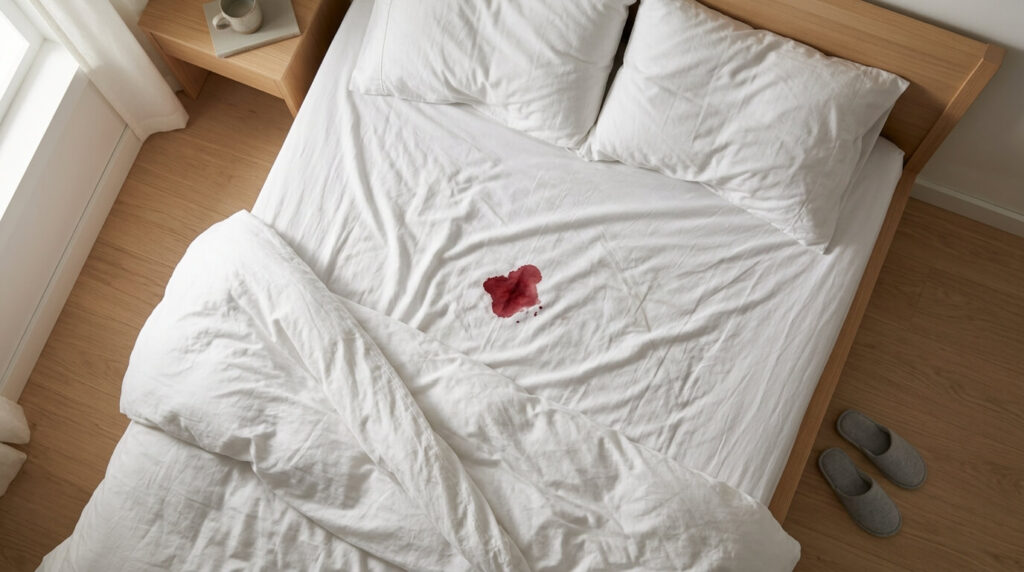
It happens to almost everyone who menstruates. You wake up, pull back the covers, and there it is — a period blood stain on the mattress. Your first instinct might be to panic, but take a breath. This is completely fixable, even if the stain has been sitting there for hours or days.
Period blood is different from other stains. It is protein-based, which means heat is your enemy and timing is everything. The good news is that most menstrual blood stains respond very well to simple, inexpensive household products — if you use the right technique.
This guide walks you through exactly how to get period blood out of a mattress, whether the stain is still fresh or has already dried. You will also find a method comparison table, common mistakes to avoid, and tips specific to different mattress types including memory foam, hybrid, and innerspring.
Why Period Blood Stains Your Mattress Differently
Not all stains behave the same way, and understanding why makes a real difference in how you treat them.
Blood contains proteins, iron, and other organic compounds. When menstrual blood hits fabric, those proteins begin to bind with the textile fibers. The longer the stain sits — especially in the presence of warmth — the tighter that bond becomes. This is why a stain that looks manageable at night can feel almost permanent by morning.
Menstrual blood also contains more than just red blood cells. It includes endometrial tissue, mucus, and vaginal secretions, which means it can leave a slightly larger, more complex stain than a cut or nosebleed. That does not make it harder to remove, but it does mean you want a method that breaks down organic matter — not just a surface wipe.
| Key Science Note Always use COLD water on blood stains. Hot or warm water cooks the proteins and permanently bonds the stain to the fabric. This is the single most important rule in blood stain removal. |
What You Need Before You Start
You probably already have most of these at home. Gather everything before you begin so you are not running back and forth once you have started treating the stain. Do you know can we drink coffee in pregnancy?
Keep These Nearby
- Cold water (never warm or hot)
- Clean white cloths or microfiber towels
- Spray bottle (optional but helpful)
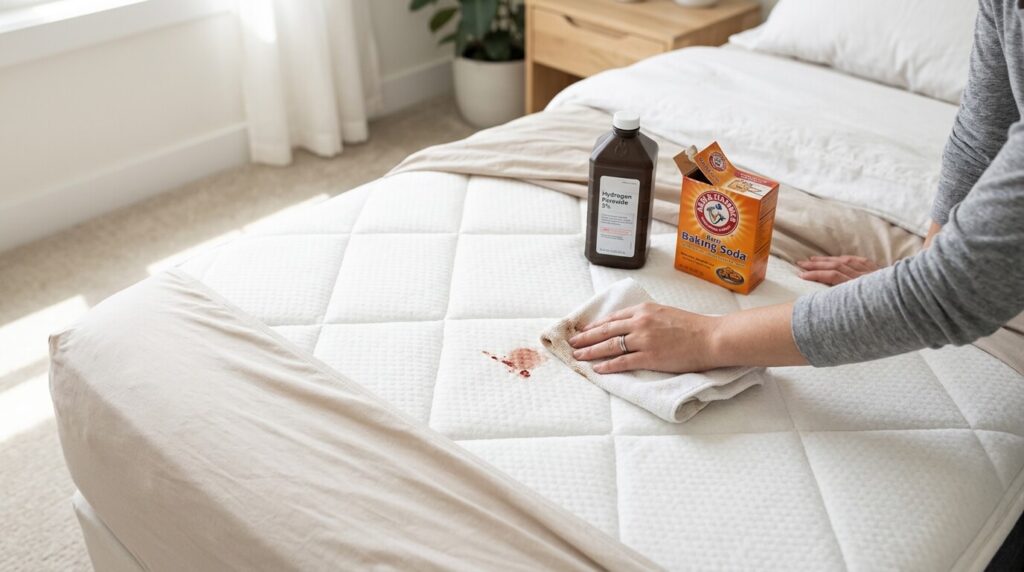
- Baking soda
- 3% hydrogen peroxide (standard pharmacy bottle)
- Liquid dish soap (clear, unscented preferred)
- Table salt
- Enzyme-based upholstery cleaner (optional but excellent for dried stains)
- Vacuum with upholstery attachment
- A fan or access to fresh air for drying
Avoid These Completely
- Hot water — sets the stain permanently
- Bleach — damages mattress materials and can cause discoloration
- Rubbing aggressively — spreads the stain deeper into the mattress
- Mixing hydrogen peroxide with vinegar or bleach — creates harmful chemical reactions
- Soaking the mattress with liquid — causes mold and mildew inside the foam layers
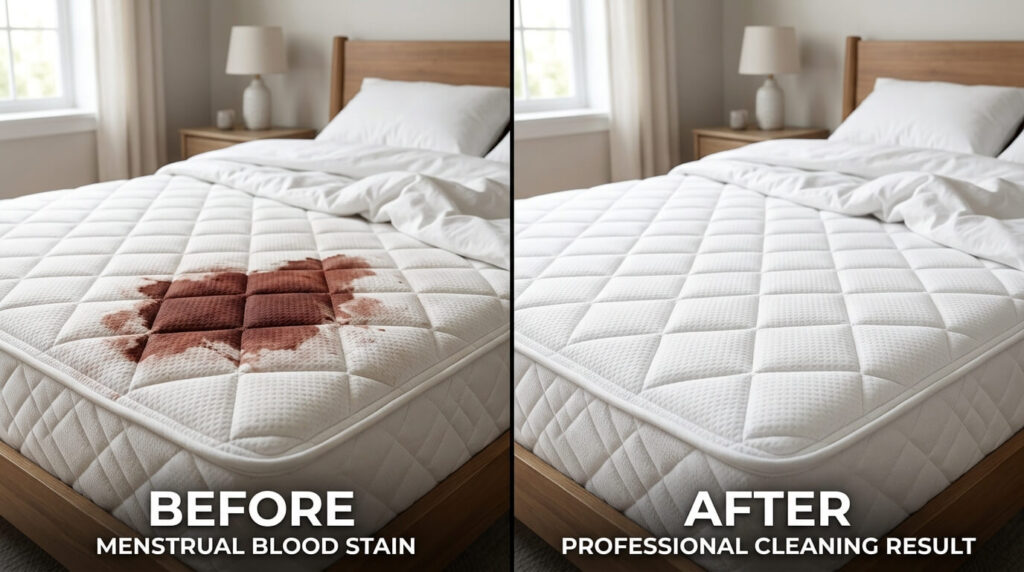
Quick Method Comparison: Which One Is Right for You?
Before diving into step-by-step instructions, use this table to find the method that matches your situation.
| Method | Best For | Stain Age | Mattress Type | Effectiveness |
| Cold Water + Blotting | Very fresh stains | Under 30 minutes | All types | ★★★★☆ |
| Salt Paste | Fresh to semi-dry | Under 2 hours | All types | ★★★★☆ |
| Hydrogen Peroxide | Fresh to moderate | Under 24 hours | All except dark fabrics | ★★★★★ |
| Baking Soda + Cold Water | Moderate stains | 1–12 hours | All types | ★★★☆☆ |
| Enzyme Cleaner | Dried/old stains | Any age | All types | ★★★★★ |
| Cornstarch Paste | Foam mattresses | Any age | Memory foam/hybrid | ★★★☆☆ |
| Dish Soap + Cold Water | Light stains | Fresh | All types | ★★★☆☆ |
Method 1: Removing Fresh Period Blood (Act Fast)
Speed is the single biggest advantage you have with a fresh stain. If you catch it within 30 to 60 minutes, cold water alone can remove most of the discoloration.
Step-by-Step for Fresh Menstrual Blood
- Strip the bedding immediately. Put sheets in cold water (not the washing machine yet) while you work on the mattress.
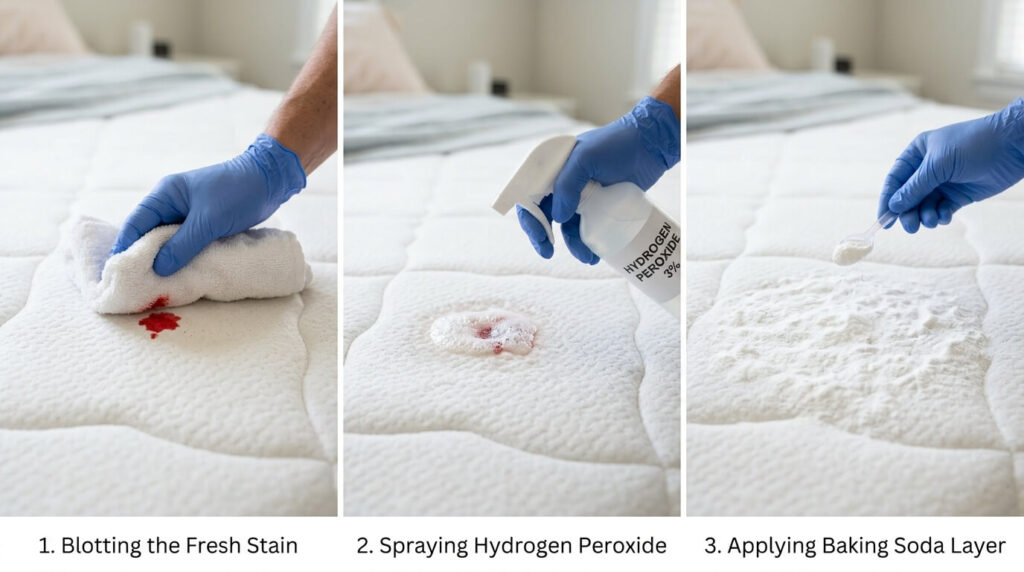
- Blot — never rub — with a clean white cloth dampened with cold water. Work from the outside edges of the stain inward to avoid spreading it.
- Keep turning the cloth to a clean section so you are always lifting blood, not redistributing it.
- Once you have lifted as much blood as possible, sprinkle a generous layer of baking soda over the damp area.
- Wait 30 minutes. The baking soda will absorb residual moisture and odor.
- Vacuum the baking soda thoroughly.
- If any discoloration remains, move to the hydrogen peroxide method below.
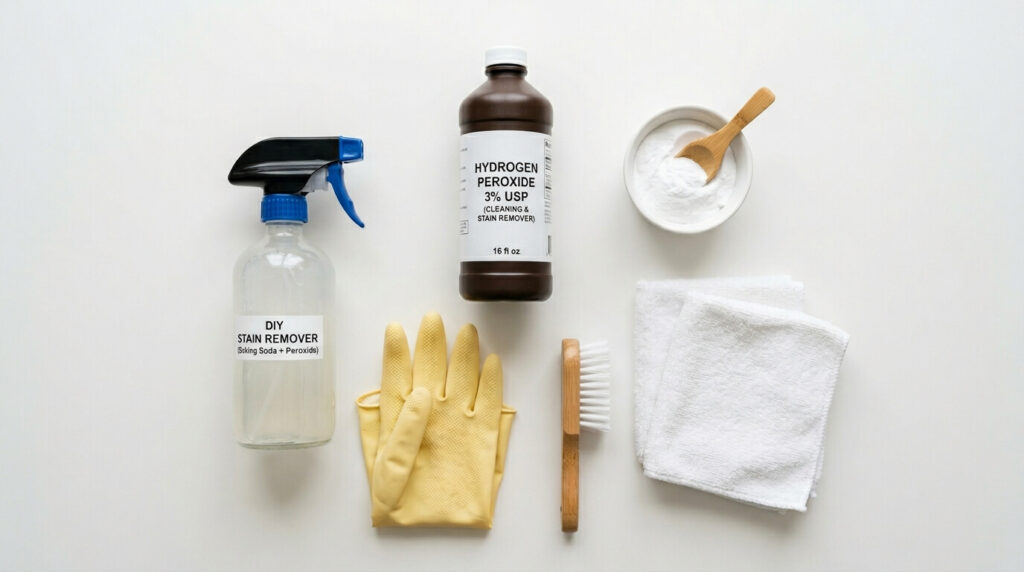
Method 2: Hydrogen Peroxide for Stubborn or Moderate Stains
Hydrogen peroxide is one of the most effective tools for blood stain removal. The 3% concentration sold at pharmacies is strong enough to break down hemoglobin — the protein that gives blood its color — without damaging most mattress fabrics.
| Spot Test First Apply a small amount of hydrogen peroxide to an inconspicuous area of your mattress before using it on the stain. Wait 5 minutes and check for discoloration. Some darker fabric covers may lighten slightly. |
Step-by-Step
- Apply a small amount of 3% hydrogen peroxide directly to the stain. You will see it fizz — that is the chemical reaction breaking down the blood proteins.
- Let it sit for 5 to 10 minutes. Do not let it dry out completely.
- Blot firmly with a clean, dry white cloth. You should see the stain transferring to the cloth.
- Repeat as needed, applying small amounts and blotting between applications.
- Once the stain is gone, blot the area with a cold, damp cloth to remove any peroxide residue.
- Finish by blotting dry, then allow the mattress to air-dry completely before making the bed.
For a slightly stronger treatment, mix 1 tablespoon of liquid dish soap with 2 tablespoons of hydrogen peroxide and apply the same way. The soap helps break down the oilier components of menstrual blood while the peroxide targets the protein.
Method 3: Salt Paste for Fresh to Semi-Dried Stains
This method is especially useful if you do not have hydrogen peroxide on hand. Salt draws moisture out of the stain and helps lift it from the fibers.
How to Make and Use a Salt Paste
- Mix 2 tablespoons of table salt with just enough cold water to form a thick paste.
- Apply the paste generously over the stain and gently press it into the fabric with your fingers.
- Leave it on for 30 to 45 minutes.
- Scrape off the dried paste with a dull knife or spoon.
- Blot with a cold, damp cloth to remove any remaining residue.
- Allow to air-dry and vacuum if any gritty residue remains.
Method 4: Removing Dried or Old Period Blood Stains
Dried period blood is trickier, but it is not impossible. The key is to rehydrate the stain first, then use an enzyme cleaner or hydrogen peroxide to break down the protein that has bonded to the fabric.
Old stains may require multiple treatment rounds. Be patient and do not over-saturate the mattress.
Step-by-Step for Dried Menstrual Blood
- Dampen the stained area lightly with cold water. This softens the dried proteins and makes them more responsive to cleaning agents. Let it sit for 5 minutes.
- Apply an enzyme-based upholstery cleaner following the product instructions. Enzyme cleaners are specifically designed to digest organic matter including blood, urine, and other protein-based stains.
- Cover the area with a damp cloth and leave for 15 to 30 minutes. This keeps the enzyme cleaner active longer.
- Blot the area firmly with a clean, dry cloth. Check for stain transfer.
- Repeat steps 2 through 4 if the stain is still visible after the first application.
- Finish by blotting with cold water to rinse, then dry the area as quickly as possible.
| Pro Tip: Enzyme Cleaner Selection Look for enzyme cleaners that specifically list ‘protein stains’ or ‘blood’ on the label. Products marketed for pet stains often work well too since they are formulated for organic biological matter. Brands like OxiClean Stain Remover, Zout, and enzymatic pet stain cleaners are all solid choices. |
Cleaning Period Blood by Mattress Type
Your mattress construction affects how you should apply these methods. The biggest risk with any mattress is over-wetting — especially with foam.
Memory Foam Mattresses
Memory foam is highly absorbent and takes a long time to dry internally. Too much liquid can cause mold to develop inside the foam layers where you cannot see or reach it.
- Use the minimum amount of liquid necessary — barely damp cloths only
- Opt for paste-based treatments (salt paste, cornstarch paste) over liquid sprays
- Always blot aggressively after each application to pull moisture back out
- Use a fan directed at the stain area after cleaning to speed drying
- Allow at least 6 to 8 hours of drying time before replacing bedding
Hybrid Mattresses
Hybrid mattresses combine foam comfort layers with innerspring support. They are slightly more forgiving than pure memory foam but still susceptible to moisture damage in the foam layers.
- Follow the same low-moisture approach as memory foam
- Hydrogen peroxide works well on hybrids — apply sparingly and blot immediately
- The fabric cover on most hybrids responds well to enzyme cleaners
Innerspring Mattresses
Traditional innerspring mattresses with fabric or quilt covers are the most forgiving to clean. They dry more quickly and tolerate slightly more liquid during the cleaning process.
- Cold water and blotting often handles fresh stains completely
- Hydrogen peroxide is highly effective on fabric covers
- Still avoid soaking — innerspring mattresses with pillow tops have foam layers that hold moisture
Latex Mattresses
Natural latex can be sensitive to hydrogen peroxide and harsh chemical cleaners.
- Stick to cold water, salt paste, or mild dish soap solutions
- Test any product on a hidden area first
- Enzyme cleaners are generally safe for latex but always check the product label
Common Mistakes That Make Period Blood Stains Worse
Even well-meaning cleaning attempts can permanently set a stain if you make one of these mistakes.
- Using hot water. This is the number one mistake. Even lukewarm water accelerates protein bonding. Always use cold water for blood stains.
- Rubbing the stain. Rubbing spreads the stain laterally and pushes it deeper into mattress fibers. Always blot in a controlled motion from the edges inward.
- Waiting too long to start. Dried stains can still be removed but they require more effort and multiple treatment rounds. The sooner you act, the better.
- Over-wetting the mattress. Excess moisture trapped inside a mattress creates the perfect environment for mold and mildew, which cause persistent odors and damage the mattress structure.
- Skipping the spot test. Hydrogen peroxide can lighten some darker mattress fabric covers. Always test in an inconspicuous area first.
- Using bleach. Bleach degrades mattress materials over time and can create a yellow discoloration that is impossible to reverse.
- Not drying the mattress completely. Putting bedding back on a damp mattress traps moisture and accelerates odor development and mold growth.
Removing Period Blood Odor From Your Mattress
Even after a stain is visually gone, a faint odor can sometimes linger — especially with older stains or if the stain penetrated deeper into the foam layers.
Baking Soda Odor Treatment
- After the stain has been treated and the area is dry, sprinkle a generous layer of baking soda over the entire cleaned area.
- Let it sit for a minimum of 8 hours — ideally overnight or up to 24 hours.
- Vacuum thoroughly.
Baking soda is a natural odor absorber. It neutralizes acidic and organic odors without adding fragrance, which can sometimes react with mattress materials.
White Vinegar Rinse for Odor
After the stain is removed, lightly mist the area with undiluted white vinegar and allow it to air-dry completely. Vinegar neutralizes organic odors. Note: do not use vinegar while hydrogen peroxide is still present on the mattress.
How to Protect Your Mattress During Your Period
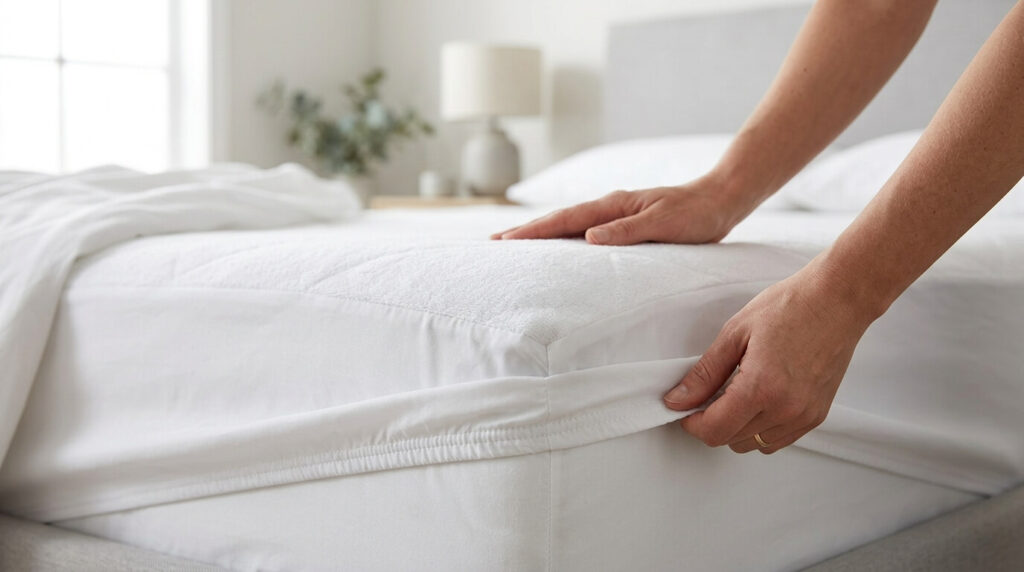
The most effective way to deal with period blood on a mattress is to prevent it from reaching the mattress in the first place. A waterproof mattress protector is one of the best investments you can make for mattress longevity.
What to Look For in a Period-Proof Mattress Protector
- Waterproof backing: Look for TPU (thermoplastic polyurethane) or polyurethane-coated protectors, which block liquid completely.
- Breathable top layer: Terry cotton or bamboo covers keep the surface cool while the waterproof backing does its job.
- Full encasement vs. fitted style: A full encasement protector covers all six sides and offers better protection against accidents compared to a fitted-sheet style.
- Machine washable: Choose a protector that is easy to launder. You want it clean and ready to go again quickly.
Other protective strategies during heavy flow days include wearing period underwear to bed, using a menstrual cup or disc that reduces nighttime leakage, and layering an old towel or period blanket beneath your regular sheets as a low-cost backup.
When to Call a Professional (or Accept the Loss)
Most period blood stains respond well to at-home treatment. But there are situations where professional cleaning or mattress replacement may be the more practical option.
- The stain is extremely large and has penetrated deeply into the mattress core
- The mattress has a persistent mold or mildew smell despite thorough cleaning and drying
- The mattress cover cannot be removed and the stain has soaked through multiple layers
- The mattress is already very old and the stain is the latest in a long series of damage
Professional upholstery cleaners use extraction equipment that removes moisture and staining agents from deep within mattress layers. This is significantly more effective than surface treatment for deep or old stains.
The Bottom Line
Getting period blood out of a mattress is genuinely manageable with the right approach. Cold water, time, and the correct cleaning agent will handle the vast majority of menstrual blood stains — fresh or dried.
The most important things to remember: always use cold water, never rub, and let the mattress dry completely before covering it again. For stubborn or old stains, hydrogen peroxide and enzyme cleaners are your best tools.
And if you want to stop dealing with this problem entirely, a good waterproof mattress protector is the simplest, most effective solution available. It takes 30 seconds to put on and saves hours of stain removal effort down the line.
Frequently Asked Questions
Does period blood permanently stain a mattress?
Not necessarily. Fresh period blood can almost always be fully removed with cold water and blotting. Dried and old stains are more challenging but can still be significantly lightened or completely removed with hydrogen peroxide or enzyme cleaners. The key variable is how quickly you act.
What removes period blood from a mattress fast?
For fresh stains, cold water and immediate blotting is the fastest approach. For stains that have sat for a few hours, 3% hydrogen peroxide applied directly to the stain and left for 5 to 10 minutes before blotting is the most effective fast-acting method.
Can I use OxiClean to remove period blood from a mattress?
Yes. OxiClean contains oxygen-based bleaching agents and enzymes that are effective on protein-based stains including blood. Mix according to package directions with cold water, apply to the stain, let it sit for the recommended time, and blot clean. Always spot-test first on your mattress fabric.
How do you get dried period blood out of a mattress without hydrogen peroxide?
Rehydrate the dried stain with cold water first, then apply an enzyme cleaner. Let the enzyme cleaner work for 15 to 30 minutes before blotting. Alternatively, a paste of baking soda and cold water applied generously and left to dry can help lift the stain when vacuumed away.
Is it safe to use hydrogen peroxide on a memory foam mattress?
Yes, but use it sparingly. Apply a small amount directly to the stain, let it fizz for 5 to 10 minutes, then blot immediately and thoroughly to remove as much moisture as possible. Over-wetting memory foam can lead to mold growth inside the foam layers, which is why minimal liquid application is important.
Will baking soda remove period blood from a mattress?
Baking soda helps absorb residual moisture and lift light staining, but it works best as a complementary step rather than a standalone treatment for blood stains. Use it after initial blotting to pull out remaining moisture and odor, or in combination with cold water as a gentle paste for fresh stains.
How long does it take to dry a mattress after cleaning a blood stain?
With proper airflow — a fan directed at the mattress, open windows — a surface-treated area should be dry to the touch within 2 to 4 hours. Memory foam and hybrid mattresses can retain internal moisture longer. Wait at least 6 to 8 hours before replacing mattress covers or bedding to be safe.
Can I prevent period blood stains on my mattress?
Yes. A waterproof mattress protector is the most effective prevention tool. Period underwear, menstrual cups, and menstrual discs also reduce the likelihood of leakage overnight. Some people add an extra old towel or a purpose-made period blanket as a second layer during heavy flow days.