What helps with nausea during pregnancy? Struggling with pregnancy nausea? Discover what actually helps — from ginger and vitamin B6 to acupressure, safe medications, and the foods OB-GYNs recommend. Complete, doctor-aligned guide with tips for every stage of pregnancy. Pregnancy nausea is one of the most common — and most exhausting — parts of early pregnancy. If you’re dealing with constant queasiness, you’re not alone: up to 80% of pregnant women experience some form of nausea or vomiting during pregnancy, according to recent research published in ScienceDirect (2024). How To Reduce Period Cramps?
The good news? There are real, effective options — from simple food swaps to supplements, acupressure, and medications your OB-GYN can prescribe. This guide covers every evidence-backed remedy in plain language, so you can find what works for your body and your situation.
The Short Answer: What Helps Most with Pregnancy Nausea
The most effective first steps for pregnancy nausea are eating small, frequent meals; taking vitamin B6 (10–25 mg, three times daily); and trying ginger in tea, capsule, or candy form. Acupressure wristbands, avoiding strong smells, and staying hydrated with cold or carbonated fluids also help. If symptoms are severe, your doctor may prescribe doxylamine + B6 or other antiemetics.
Why Does Nausea Happen During Pregnancy?
Morning sickness — technically called nausea and vomiting of pregnancy (NVP) — typically begins around week 6 and peaks between weeks 8 and 10, according to Cleveland Clinic. For most women, symptoms ease by the end of the first trimester (around week 13). Some women experience lingering nausea into the second trimester, and in rare cases, throughout the entire pregnancy.
Despite the name, morning sickness can strike at any time of day or night.
The Role of HCG and GDF15
The exact cause isn’t fully understood, but two hormones are strongly linked to pregnancy nausea:
- Human chorionic gonadotropin (HCG): This hormone rises sharply in early pregnancy — right around the same time nausea starts. Many researchers believe HCG directly stimulates nausea centers in the brain.
- GDF15: A 2024 study cited by Rochester Regional Health found that elevated levels of a hormone called GDF15 — which acts on brainstem receptors — are linked to more severe nausea and vomiting during pregnancy. Researchers are actively studying whether reducing GDF15 sensitivity could help women in the future.
Other Factors That Make Nausea Worse
Some women are at higher risk for more severe morning sickness, including those carrying multiples, those with a history of motion sickness or migraines, and those who experienced nausea on hormonal birth control. Low blood sugar, fatigue, and iron in prenatal vitamins can also worsen symptoms.

What Helps with Nausea During Pregnancy
Dietary Changes That Relieve Pregnancy Nausea
Food choices are your first and most powerful tool for managing pregnancy nausea — and small changes can make a big difference.
Eat Small, Frequent Meals
An empty stomach makes nausea significantly worse. Low blood sugar is a known trigger. Instead of three large meals, aim for 5–6 small meals or snacks throughout the day, eating every 2–3 hours. Never let yourself get truly hungry.
Keep a light snack — like plain crackers — on your nightstand and eat a few bites before getting out of bed in the morning. This simple habit helps many women dramatically.
Best Foods to Eat When You’re Nauseous
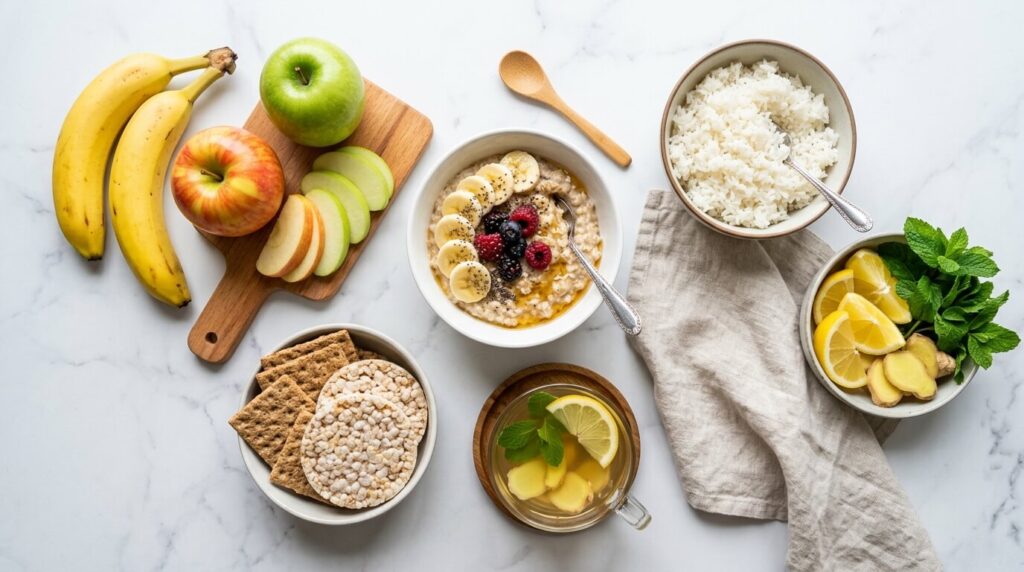
When nausea is peaking, bland, low-fat, and cold or room-temperature foods are easiest to tolerate. Good options include:
- Plain crackers, dry toast, or pretzels — easily digestible carbs that calm the stomach
- Bananas, applesauce, rice, or plain potatoes — BRAT-adjacent foods that are gentle
- Cold foods — cold foods produce fewer odors than hot foods, which can trigger nausea
- Protein-rich snacks — cheese, peanut butter, nuts, or hard-boiled eggs help stabilize blood sugar
- Ginger-containing foods — ginger ale (with real ginger), ginger chews, or ginger tea
- Lemon — sucking on lemon slices or smelling fresh lemon may reduce queasiness for some women
- Carbonated water or mineral water — light carbonation can help reduce stomach acidity and settle the gut
The Mother Baby Center notes that carbonated beverages can help reduce stomach acidity, though they recommend sipping slowly to avoid bloating.
Foods and Smells to Avoid
Common triggers vary by person, but many pregnant women find these worsen nausea:
- Spicy, greasy, or fried foods
- Strong-smelling foods (fish, garlic, onions, cooked meat)
- Very sweet or rich foods
- Coffee or caffeinated beverages
- Foods with strong odors, even favorites from before pregnancy
Staying Hydrated When You Can’t Stomach Water
Dehydration makes nausea worse — but drinking large amounts of fluid can also trigger vomiting. Try these strategies:
- Sip small amounts of fluid throughout the day rather than drinking large glasses at once
- Drink fluids 30 minutes before or after meals, not during
- Try cold water, sparkling water, herbal teas (peppermint or ginger), or ice chips
- Electrolyte drinks (like Pedialyte or coconut water) can help replace lost fluids
Supplements That Help with Morning Sickness
Vitamin B6 (Pyridoxine) — The First-Line Remedy
Vitamin B6 is one of the most well-studied and widely recommended treatments for pregnancy nausea. Research published in the National Library of Medicine confirms it is effective therapy for nausea and vomiting of pregnancy.
Typical dosage: 10–25 mg, taken three to four times daily. Always check with your OB-GYN before starting, as dosages above 100 mg/day can cause nerve issues.
Vitamin B6 is also found naturally in chickpeas, salmon, tuna, chicken, beef, and fortified cereals — so eating these regularly may provide additional support.
Expert Tip: ACOG (American College of Obstetricians and Gynecologists) recommends vitamin B6 as a first-line treatment for morning sickness.
Ginger — The Most Researched Natural Option
Ginger has significant clinical support as a natural anti-nausea remedy. Research summarized by EBSCO identifies ginger as one of the “principal proposed natural treatments” for morning sickness, alongside vitamin B6 and acupressure.
How to use ginger:
- Ginger tea (steep fresh ginger slices in hot water)
- Ginger capsules (250 mg, 4 times daily is a commonly studied dose)
- Ginger chews or candies
- Ginger ale with real ginger extract
Ginger appears to work by blocking serotonin receptors in the gut that trigger nausea signals.
What About Prenatal Vitamins?
Ironically, prenatal vitamins — especially those high in iron — can worsen nausea. If this is happening to you, try:
- Taking your prenatal vitamin with food or at bedtime instead of in the morning
- Switching to a gummy prenatal (lower iron, easier to tolerate)
- Asking your OB-GYN about splitting your prenatal into two half-doses
Don’t stop taking your prenatal vitamin without talking to your provider — the folate is especially critical in early pregnancy.

Lifestyle Adjustments That Make a Real Difference
Rest and Sleep Position
Fatigue dramatically worsens pregnancy nausea. Prioritize sleep, and if possible, take short naps during the day. When you wake up, avoid standing up quickly — rise slowly and eat a small snack before getting out of bed.
Some women find sleeping slightly propped up (on a wedge pillow) helps, as lying completely flat can worsen reflux-related nausea.
Acupressure at the P6 Point
Acupressure at the P6 (Neiguan) point — located on the inner wrist, about three finger-widths below the wrist crease — has been studied in multiple clinical trials. A randomized controlled trial published in the International Journal of Environmental Research and Public Health found acupressure at P6 reduced nausea in women with hyperemesis gravidarum.
How to try it:
- Use Sea-Bands (motion sickness wristbands available at most pharmacies) for continuous pressure
- Apply firm, circular pressure with your thumb for 2–3 minutes at a time
Aromatherapy — What the Research Says
Certain essential oils may help reduce nausea through the olfactory system. Lemon oil has the most promising evidence for pregnancy-related nausea. Peppermint, lavender, chamomile, and orange have also been studied, though primarily in non-pregnancy populations.
The Canadian Digestive Health Foundation notes that peppermint oil combined with lemon oil may help reduce nausea symptoms based on aromatherapy research. Drinking peppermint tea is also a great way to increase fluid intake.
To use safely:
- Inhale directly from the bottle or a diffuser — do not apply undiluted oils directly to skin
- Avoid diffusing in closed spaces for long periods
- Consult your OB-GYN before using any essential oil internally
Fresh Air and Avoiding Triggers
- Open windows when cooking or after meals
- Ask family members to cook if strong food smells trigger nausea
- Avoid enclosed spaces with recycled air when possible
- Wear loose, comfortable clothing that doesn’t constrict the abdomen
Breathing exercises have also been studied. A 2020 study found controlled breathing techniques to be effective in combating nausea, even in populations beyond pregnancy.
Over-the-Counter and Prescription Treatments
When diet and lifestyle changes aren’t enough, safe medications are available — and you should not feel guilty for using them.
Doxylamine + B6 (Diclegis / Bonjesta)
The combination of doxylamine (an antihistamine and sleep aid, sold as Unisom SleepTabs) and vitamin B6 is the only FDA-approved prescription treatment specifically for morning sickness. It’s sold under the brand names Diclegis and Bonjesta.
This combination has an excellent safety record and is considered first-line pharmacological therapy by ACOG. Many women take it at bedtime to take advantage of its sedating effects.
Antihistamines
Certain antihistamines — including diphenhydramine (Benadryl) and meclizine (Dramamine) — can reduce nausea and are generally considered safe during pregnancy when used occasionally. Talk to your provider before regular use.
Prescription Medications
For more severe nausea, your OB-GYN may prescribe:
- Ondansetron (Zofran): Originally developed for chemotherapy-related nausea, now commonly used for severe pregnancy nausea. Most providers consider it safe after the first trimester, though some caution exists for very early use.
- Promethazine (Phenergan): Another antiemetic used for pregnancy nausea and vomiting.
- Metoclopramide (Reglan): Helps the stomach empty faster, reducing nausea.
- Corticosteroids: Reserved for very severe hyperemesis gravidarum.
Never take any medication during pregnancy without checking with your OB-GYN first — even medications that were safe before pregnancy.
Remedy Comparison Table
| Remedy | Evidence Level | Safety | When to Try |
|---|---|---|---|
| Small, frequent meals | Strong (clinical consensus) | Excellent | Immediately |
| Vitamin B6 (10–25 mg, 3x/day) | Strong (randomized trials) | Excellent | Week 6+ |
| Ginger (tea, capsule, candy) | Moderate–Strong | Excellent | Anytime |
| Acupressure (P6 / Sea-Bands) | Moderate | Excellent | Anytime |
| Carbonated water / cold fluids | Moderate | Excellent | Anytime |
| Lemon aromatherapy | Moderate | Excellent | Anytime |
| Doxylamine + B6 (Diclegis) | Strong (FDA-approved) | Very Good | If OTC doesn’t help |
| Ondansetron (Zofran) | Strong | Good (caution in T1) | Prescription only |
| Antihistamines | Moderate | Good | Occasional use only |
| IV fluids | High (for dehydration) | Excellent | Hospital/ER setting |
Morning Sickness vs. Hyperemesis Gravidarum — Know the Difference
Most pregnancy nausea is uncomfortable but manageable. Hyperemesis gravidarum (HG) is a severe form affecting about 0.3–3% of pregnant women, and it requires medical treatment.
| Feature | Morning Sickness | Hyperemesis Gravidarum |
|---|---|---|
| Vomiting frequency | Occasional to daily | Multiple times daily |
| Weight loss | Minimal | 5%+ of pre-pregnancy weight |
| Dehydration | Mild | Moderate to severe |
| Ability to keep fluids down | Usually yes | Often no |
| Work/daily function | Reduced | Severely impaired |
| Treatment needed | Home remedies, OTC | IV fluids, prescription meds |
When to Call Your OB-GYN
Call your provider if you:
- Can’t keep any food or fluid down for 24 hours
- Have dark urine or aren’t urinating regularly
- Feel dizzy or faint when standing
- Have lost weight
- Experience nausea that began after week 9 (could indicate another cause)
- Are vomiting blood
When to Go to the ER
Go to the emergency room if you:
- Are severely dehydrated (not urinating, extremely weak, rapid heartbeat)
- Have lost more than 5% of your pre-pregnancy body weight
- Cannot tolerate any oral fluids
Does Morning Sickness Mean My Baby Is Okay?
Many women wonder if nausea is a sign of a healthy pregnancy — and research does suggest a connection. Studies have found that women who experience morning sickness have a slightly lower risk of miscarriage, possibly because strong nausea is associated with vigorous placental development and high HCG levels.
That said, having little or no nausea does not mean something is wrong. Every pregnancy and every body is different. If you have concerns about symptoms (or the lack of them), your OB-GYN is always your best resource.
FAQ
Q: When does morning sickness start during pregnancy? A: Most women notice nausea around week 6, though it can begin as early as week 4. Symptoms typically peak between weeks 8 and 10 and improve by the end of the first trimester (around week 13).
Q: Why is it called “morning sickness” if it happens all day? A: The name is a misnomer. Pregnancy nausea can occur at any time — morning, afternoon, or night. The term stuck historically, but many healthcare providers now prefer “nausea and vomiting of pregnancy” (NVP).
Q: Is it safe to take Unisom and B6 together during pregnancy? A: Yes — the combination of doxylamine (Unisom SleepTabs) and vitamin B6 is FDA-approved as the first-line pharmacological treatment for morning sickness. Always confirm the dose with your OB-GYN.
Q: What foods help the most with pregnancy nausea? A: Bland, low-fat, cold or room-temperature foods tend to help most — plain crackers, bananas, rice, boiled potatoes, ginger chews, and cold sparkling water are commonly recommended. Protein-rich snacks also help stabilize blood sugar, which reduces nausea.
Q: What vitamins help with nausea during pregnancy? A: Vitamin B6 (pyridoxine) is the most evidence-backed supplement for pregnancy nausea. A typical dose is 10–25 mg, taken three to four times daily. Always check with your provider before starting.
Q: How much ginger should I take for morning sickness? A: A commonly studied dose in clinical trials is 250 mg of ginger capsules, four times daily. Ginger tea and ginger candies are also effective for milder symptoms. Ginger is generally considered safe during pregnancy in food and supplement amounts.

Q: Can morning sickness harm my baby? A: Typical morning sickness does not harm your baby. However, severe, untreated hyperemesis gravidarum that leads to significant weight loss and nutritional deficiency can affect fetal growth. If you’re struggling to keep any food down, contact your provider.
Q: Does morning sickness get worse with twins? A: Yes — women carrying multiples tend to have higher HCG levels, which is associated with more severe nausea. If you’re expecting twins or more, discuss a prevention plan with your OB-GYN early.
Q: When does morning sickness go away? A: For most women, nausea improves significantly between weeks 12 and 14. Some women experience lingering nausea into the second trimester. A small percentage experience nausea throughout pregnancy.
Q: Can I take Zofran (ondansetron) for morning sickness? A: Zofran is sometimes prescribed for moderate to severe pregnancy nausea, particularly after the first trimester. Some research has suggested caution with very early use, so discuss the timing and appropriateness with your OB-GYN.
Q: Does acupressure really work for pregnancy nausea? A: Randomized controlled trials support acupressure at the P6 wrist point for reducing pregnancy nausea. Sea-Bands (acupressure wristbands) are an easy, safe, drug-free way to apply continuous pressure. They won’t work for everyone, but many women find them helpful.
Q: What if I can’t keep my prenatal vitamin down? A: Try taking it at bedtime rather than in the morning, with a small snack. Switching to a gummy prenatal (which typically contains less iron) may help. Ask your provider before stopping or changing your prenatal.
Q: Is nausea during pregnancy a sign of a healthy pregnancy? A: Research does suggest a correlation between morning sickness and lower miscarriage risk, possibly linked to healthy HCG levels. However, having little or no nausea does not indicate a problem — many women have completely healthy pregnancies without any nausea.
Q: What’s the difference between morning sickness and hyperemesis gravidarum? A: Morning sickness involves manageable nausea and occasional vomiting. Hyperemesis gravidarum is severe, persistent vomiting that causes dehydration, significant weight loss (5%+), and inability to keep any fluids down. HG requires medical treatment, often including IV fluids and prescription medication.
Q: How do I stop nausea at night during pregnancy? A: Eat a light protein-rich snack before bed, stay propped up slightly, avoid large meals in the evening, and keep crackers nearby if you wake up feeling sick. If nighttime nausea is severe, ask your provider about taking doxylamine at bedtime.