
Can periods cause dizziness? Learn how hormones, anemia, blood loss, dehydration, and PMS can trigger dizziness during your period and what helps. If you’ve ever felt lightheaded, unsteady, or like the room is spinning during your period, you’re not imagining things. The short answer to “can periods cause dizziness?” is: yes, indirectly — and through several distinct biological pathways. Dizziness is not listed as a “classic” period symptom like cramps or bloating, but it’s more common than most people realize and more scientifically grounded than any coincidence.
This article goes beyond the basics. We’ll explain why dizziness happens at a hormonal and physiological level, walk through every possible cause (including ones most sources miss), cover conditions like endometriosis, PCOS, and POTS that are rarely connected to period dizziness, and give you an honest roadmap for treatment and when to seek help.
What Does “Dizziness” During Your Period Actually Feel Like?
Dizziness is an umbrella term that can mean different things. During your period, you might experience:
- Lightheadedness — a faint, woozy feeling, as if you might pass out
- Vertigo — a spinning sensation where you or your surroundings seem to move
- Disequilibrium — a general unsteadiness or loss of balance
- Pre-syncope — the sensation right before fainting, including tunnel vision and ringing in the ears
Understanding which type you’re experiencing matters because it points to different causes and solutions.
The Hormonal Science: Why Your Menstrual Cycle Affects Your Balance
This is the piece most articles skip. Dizziness during your period isn’t random — it follows a predictable hormonal pattern across the cycle.
The Estrogen and Progesterone Rollercoaster
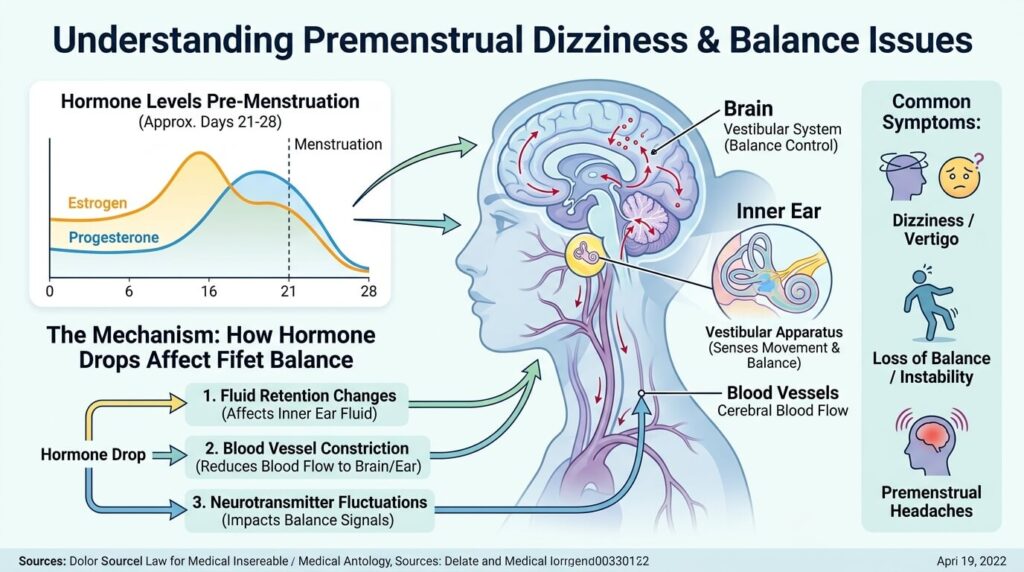
Your menstrual cycle is governed by four key hormones: estrogen, progesterone, follicle-stimulating hormone (FSH), and luteinizing hormone (LH). These don’t just regulate reproduction — they directly affect the brain, blood vessels, and the inner ear.
In the days leading up to menstruation (the luteal phase), both estrogen and progesterone levels drop sharply. This isn’t just a reproductive event — it destabilizes multiple body systems:
- Estrogen plays a key role in regulating serotonin and dopamine, neurotransmitters that help with sensory processing and mood. When estrogen falls, sensory processing becomes less stable, making you more sensitive to motion and spatial changes.
- Progesterone has a calming, vasodilatory effect on blood vessels. As it rises mid-cycle, it causes blood vessels to relax and dilate, which can lower blood pressure and trigger lightheadedness — especially when you stand up suddenly (orthostatic hypotension).

Estrogen Receptors in the Inner Ear
Here’s something almost no mainstream article covers: your inner ear has estrogen and progesterone receptors. Research published in a Norwegian medical journal confirmed that oestrogen receptors alpha and beta, as well as progesterone receptors, are present in the inner ear — meaning your balance organs are directly responsive to hormonal fluctuations across your cycle.
This is why vestibular disorders (disorders of balance and spatial orientation) are significantly more common in women than men, and why symptoms often fluctuate with the menstrual cycle, pregnancy, hormonal contraception, and menopause.
10 Specific Causes of Dizziness During Your Period
1. Blood Loss and Iron-Deficiency Anemia
Heavy menstrual bleeding (menorrhagia) is one of the most direct causes of dizziness. When you lose significant blood volume, your body has fewer red blood cells available to carry oxygen throughout the body. The brain is extremely sensitive to oxygen levels, and even mild reductions can cause lightheadedness.
Iron-deficiency anemia — the most common type of anemia worldwide — is particularly tied to the menstrual cycle. If you already have low iron stores, your period can push you further into deficit. Signs that anemia may be behind your dizziness include:
- Fatigue that doesn’t improve with rest
- Pale skin or pale inner eyelids
- Shortness of breath with minimal exertion
- Cold hands and feet
- Brittle nails
You can soak through a pad or tampon in under 3 hours during heavy periods. If this is your pattern and you’re dizzy, anemia is a strong suspect and a simple blood test can confirm it.
2. Prostaglandins and Vascular Constriction
Prostaglandins are hormone-like chemicals your uterus produces to trigger contractions during menstruation. In normal amounts they do their job efficiently. But when your body overproduces prostaglandins — which is common in conditions like primary dysmenorrhea — they can enter the bloodstream and cause constriction of blood vessels throughout the body.
This systemic vasoconstriction can reduce blood flow to the brain, causing dizziness. Prostaglandins can also trigger nausea, vomiting, and diarrhea. Notably, a study on dysmenorrhea symptoms found that dizziness ranked second on the list of most commonly reported symptoms — higher than most people expect.
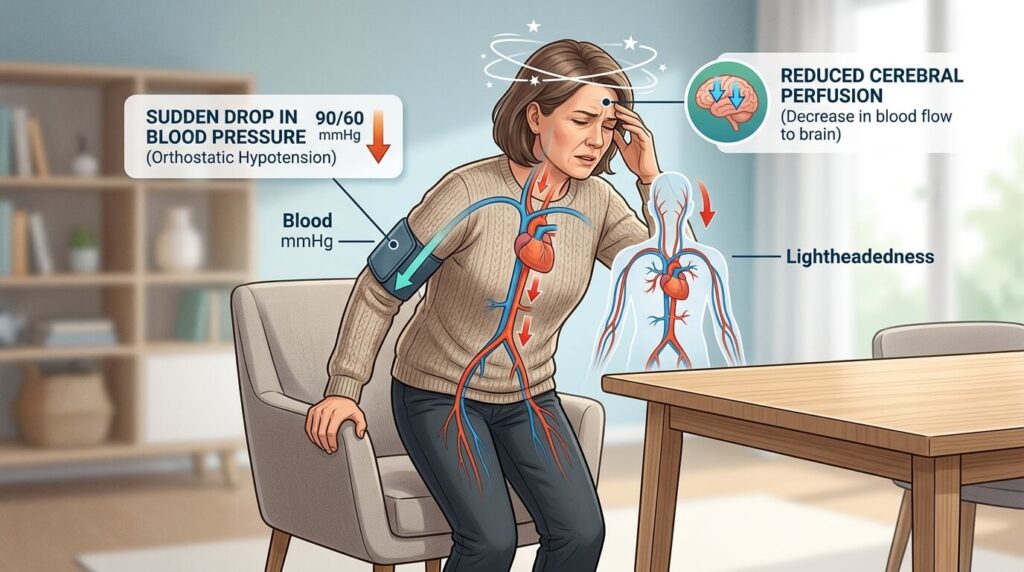
3. Orthostatic Hypotension (Postural Dizziness)
Orthostatic hypotension is a sudden drop in blood pressure when you move from lying or sitting to standing. During your period, several factors combine to make this more likely:
- Progesterone-induced vasodilation means blood vessels are more relaxed
- Blood and fluid loss reduces overall blood volume
- Dehydration (common during menstruation due to hormonal fluid shifts) further reduces circulating volume
If your dizziness occurs specifically when you stand up — often with a brief head rush or darkening of vision — orthostatic hypotension is likely. Standing up slowly and sitting at the edge of the bed for a moment before rising can help.
4. Hormonal Impact on Blood Sugar
Estrogen directly influences insulin sensitivity. As estrogen levels shift throughout your cycle, so can your blood sugar regulation. Dropping estrogen before and during menstruation can contribute to blood sugar instability, especially if you’re skipping meals due to cramps, nausea, or disrupted appetite.
Low blood sugar (hypoglycemia) is a well-recognized cause of dizziness, shakiness, sweating, and brain fog. This connection is especially relevant for people with PCOS (polycystic ovary syndrome), who already have underlying insulin resistance that can worsen cyclically with hormonal shifts.
5. Dehydration and Electrolyte Imbalance
Hormonal fluctuations during the menstrual cycle affect how your body manages fluid balance. Progesterone, in particular, influences fluid retention and electrolyte levels. Some people find they are more dehydrated during their period than at other times — not because they’re drinking less, but because hormonal changes alter how efficiently the body holds onto fluids.
Dehydration even at mild levels (1–2% of body weight) is enough to cause dizziness, reduced concentration, and fatigue. If you also have vomiting or diarrhea from prostaglandins, electrolyte losses compound the problem.
6. Premenstrual Dysphoric Disorder (PMDD)
PMDD is a severe, clinically recognized condition distinct from PMS. It involves extreme mood changes, severe cramps, headaches, intense fatigue, and can include dizziness. The neurological basis of PMDD is thought to involve abnormal sensitivity to the normal hormonal fluctuations of the cycle — particularly the sharp progesterone and estrogen withdrawal before menstruation.
Dizziness in PMDD is part of a broader neurological dysregulation pattern. People with PMDD may also experience panic attacks, depersonalization, and extreme fatigue — all of which can contribute to or accompany the dizzy feeling.
7. Vestibular Disorders Triggered by Hormone Fluctuations
The vestibular system — your inner ears and the balance-related networks in your brain — can be directly disrupted by hormonal shifts. Conditions like Ménière’s disease (which causes episodes of vertigo, hearing changes, and ear fullness) are known to fluctuate with the menstrual cycle in affected individuals.
Even in people without a formal vestibular diagnosis, the hormonal environment of menstruation can lower the threshold for vestibular symptoms. If you have a history of motion sickness or sensitivity to sensory input, you may notice this more acutely around your period.
8. Menstrual Migraine
Menstrual migraine is a distinct migraine type triggered by the pre-menstrual drop in estrogen. It typically occurs in the two days before menstruation through the first three days of the period. Importantly, migraine doesn’t just mean head pain — vestibular migraine causes prominent dizziness, spinning sensation, and balance disturbance, sometimes without significant headache.
If your dizziness around your period comes with light or sound sensitivity, nausea, visual disturbances (aura), or headache — menstrual migraine is a serious consideration that often goes undiagnosed.
9. POTS (Postural Orthostatic Tachycardia Syndrome)
POTS is a nervous system disorder where standing causes an abnormal spike in heart rate (30+ beats per minute above baseline), along with dizziness, lightheadedness, brain fog, and fatigue. It predominantly affects women of reproductive age.
What many people don’t realize: POTS symptoms are often significantly worse during menstruation. The hormonal environment of the period — particularly the vasodilatory effects of progesterone and blood volume changes — can push the already dysregulated autonomic nervous system further off-balance.
People with endometriosis also appear to have a higher rate of POTS and other forms of autonomic dysfunction (dysautonomia). If your dizziness is accompanied by rapid heartbeat when standing, brain fog, temperature sensitivity, or fainting, ask your doctor about POTS evaluation.
10. Endometriosis, Adenomyosis, and Underlying Conditions
Endometriosis (tissue similar to the uterine lining growing outside the uterus) and adenomyosis (similar tissue growing into the uterine muscle wall) are associated with dizziness through multiple pathways:
- Heavy bleeding leads to blood loss and anemia
- Systemic inflammation from endometrial lesions can affect nervous system function
- Dysautonomia (dysregulation of the autonomic nervous system) is increasingly recognized as part of endometriosis-related symptom patterns — where chronic pain, inflammation, and poor sleep keep the body in a persistent “alarm state” that affects blood pressure regulation and balance
Dizziness that tracks closely with severe pelvic pain, palpitations, or feeling shaky when standing in someone with known or suspected endometriosis warrants evaluation beyond just “period dizziness.”
Thyroid disorders and diabetes are two other conditions that can worsen around menstruation — both affect energy, circulation, and blood sugar, all of which influence dizziness.

Period Dizziness vs. Dizziness That Happens to Occur During Your Period
Not every dizzy spell during your period is caused by your period. Sometimes, timing is coincidental, and the dizziness has an unrelated origin. Conditions that can cause dizziness at any time include:
- Benign paroxysmal positional vertigo (BPPV) — tiny crystals displaced in the inner ear
- Cervicogenic dizziness — dizziness originating from neck tension or misalignment
- Low blood pressure from unrelated causes
- Medication side effects
- Anxiety-related dizziness or hyperventilation
- Inner ear infections (labyrinthitis or vestibular neuritis)
- Neurological conditions (rare, but worth ruling out if dizziness is severe or accompanied by neurological symptoms)
Keeping a symptom journal that tracks when your dizziness occurs relative to your cycle is the single most useful tool for distinguishing cycle-related from coincidental causes.
How to Track Your Dizziness and Identify Patterns
Tracking is something most articles recommend but few explain well. Here’s a practical approach:
- Mark your cycle days — Day 1 is the first day of bleeding
- Note dizziness episodes — record the date, time of day, intensity (1–10), type (lightheaded vs. spinning), and duration
- Record what you were doing — lying down, standing up, eating, exercising
- Note accompanying symptoms — headache, cramps, nausea, heart rate, bleeding heaviness
- Track for 2–3 cycles — patterns across multiple cycles are far more informative than one cycle
If dizziness consistently appears in the 2 days before your period through Day 2–3, that’s a strong hormonal signal. If it’s random throughout the month, other causes are more likely.
Treatment Options: From Home Remedies to Medical Interventions
Immediate Relief for Dizziness During Your Period
- Sit or lie down slowly — avoid sudden position changes; when you need to stand, do it in stages
- Hydrate actively — sip water steadily throughout the day; consider electrolyte drinks (especially if you’ve had vomiting or diarrhea)
- Eat regular, balanced meals — stable blood sugar is one of the most effective ways to prevent hormonal dizziness; never skip meals during your period
- Put your head between your legs if sitting — this promotes blood flow back to the brain during a dizzy spell
- Slow, deep breathing — activates the parasympathetic nervous system and can help calm dizziness related to anxiety or hyperventilation
Dietary Changes for Longer-Term Prevention
- Iron-rich foods: red meat, lentils, spinach, fortified cereals, tofu, pumpkin seeds
- Vitamin C with iron: helps absorption (e.g., squeeze lemon on spinach)
- Magnesium: found in dark chocolate, nuts, avocado; supports vascular health and may reduce prostaglandin-related symptoms
- Limit caffeine and alcohol around your period — both are dehydrating and can worsen blood pressure instability
- Complex carbohydrates over simple sugars to maintain steadier blood glucose
Medical Treatments
For anemia: Iron supplementation (oral iron tablets) is first-line treatment; your doctor will confirm iron-deficiency anemia through a blood test before starting supplements. Some people need IV iron if oral supplementation isn’t sufficient.
For heavy bleeding (menorrhagia): Hormonal contraceptives (combined pill, IUD with progestin), tranexamic acid, or NSAIDs like ibuprofen taken at the start of the period can reduce bleeding volume significantly.
For PMDD: Treatment options include SSRIs (antidepressants that also address the hormonal serotonin dysregulation), hormonal contraceptives, or GnRH agonists in severe cases.
For menstrual migraine: Preventive options include continuous hormonal contraception (to avoid the estrogen drop), triptans taken around the expected start of symptoms, or magnesium supplementation.
For vestibular issues: Vestibular rehabilitation therapy — a specialized form of physical therapy involving head position and gaze stabilization exercises — can significantly reduce dizziness from vestibular origins.
For POTS: Increased salt and fluid intake, compression garments, and specific medications (fludrocortisone, beta-blockers, midodrine) are used. Graded exercise under medical supervision also helps many people.
NSAIDs and Dizziness: A Note Worth Knowing
Many people take ibuprofen or naproxen (NSAIDs) for menstrual cramps. These medications work by reducing prostaglandin production — which, as explained above, is directly connected to vascular dizziness during periods. Taking NSAIDs early in the period (or even slightly before it begins) may help reduce both cramping and the prostaglandin-driven dizziness. Always take NSAIDs with food to avoid stomach irritation.
When Is Period Dizziness a Medical Emergency?
Most period dizziness is temporary and manageable. However, seek emergency care immediately if you experience:
- Dizziness with sudden severe headache (worst headache of your life)
- Loss of consciousness or fainting
- Slurred speech, difficulty swallowing, or sudden confusion
- Numbness on one side of your body
- Vision changes (double vision, loss of vision)
- Dizziness with extremely heavy bleeding (soaking a pad or tampon every hour for 2+ hours)
These combinations can signal a stroke, severe blood loss, or other serious neurological events that need immediate evaluation.
When to See Your Doctor (Non-Emergency)
Schedule an appointment if:
- Dizziness consistently disrupts your life during your period
- You suspect heavy bleeding (periods longer than 7 days, soaking through protection frequently)
- You’ve noticed symptoms that suggest POTS, PMDD, or endometriosis alongside dizziness
- Home remedies haven’t helped after 2–3 cycles
- You feel dizzy outside of your period as well
- You’re on medications and wondering if they interact with hormonal changes
Your doctor may order a blood count (CBC) to check for anemia, a ferritin level to assess iron stores, thyroid function tests, and potentially a tilt-table test if POTS is suspected.
Dizziness Before vs. During vs. After Your Period
The timing matters, and competitors don’t address this clearly:
| Timing | Most Likely Causes |
|---|---|
| 1–5 days before period | Estrogen/progesterone withdrawal, PMS, PMDD, menstrual migraine aura, low blood sugar from hormone shifts |
| During the period (Days 1–3) | Blood loss, prostaglandins, orthostatic hypotension from fluid shifts, menstrual migraine |
| Mid-cycle (around ovulation) | Brief estrogen surge can trigger vestibular sensitivity in susceptible people; some experience POTS-like symptoms |
| After the period | Anemia persisting from blood loss; rarely, other causes |
Frequently Asked Questions
Can period cramps cause dizziness? Yes — indirectly. Severe cramp pain triggers a vasovagal response in some people, causing a sudden drop in heart rate and blood pressure that leads to lightheadedness or fainting. Additionally, the same prostaglandins causing cramps can cause vascular changes that reduce blood flow to the brain.
Is it normal to feel dizzy on the first day of your period? Day 1 is when prostaglandins peak and bleeding begins. It’s the most common day to experience dizziness related to prostaglandin activity, orthostatic blood pressure changes, and early blood volume shifts. It’s not universal, but it’s not unusual.
Can a light period cause dizziness? Yes. Blood loss isn’t the only cause of period dizziness. Even people with light periods can experience dizziness from hormonal shifts, prostaglandins, low blood sugar, or dehydration — none of which require heavy bleeding.
Does dizziness mean my period is coming? For some people, dizziness in the premenstrual window (2–5 days before the period starts) is a reliable personal cycle signal due to the hormonal withdrawal pattern. If this is consistent for you across cycles, it’s likely your body’s response to the late luteal phase estrogen drop.
Can birth control affect period-related dizziness? Yes, in both directions. Combined oral contraceptives can reduce dizziness by stabilizing the hormonal fluctuations that cause it. However, progesterone-containing methods can cause vasodilation and dizziness in some people, especially in the first few months of use. Discuss this with your doctor if your dizziness started or worsened after beginning contraception.
The Takeaway
Periods can absolutely cause or worsen dizziness, and there are well-understood biological reasons why. The most common culprits are blood loss leading to anemia, prostaglandin-driven vascular changes, orthostatic hypotension from hormonal fluid shifts, and the direct effect of estrogen and progesterone fluctuations on the brain and inner ear.
But dizziness that’s severe, persistent, or comes with other concerning symptoms — heavy bleeding, fainting, rapid heartbeat when standing, or accompanying neurological signs — deserves medical evaluation. It may point to anemia, PMDD, POTS, endometriosis, or menstrual migraine, all of which are treatable.
The best first step is to track your symptoms across 2–3 cycles. Patterns reveal causes. And knowing your cause puts you in a position to actually address it — not just push through each month wondering why you feel off.
“This article is for informational purposes only and does not constitute medical advice. If you are experiencing severe or persistent dizziness, consult a qualified healthcare professional.“