
Your throat is scratchy, your head feels stuffed with cotton, and the first thing you reach for is the medicine cabinet — then you remember you’re pregnant and stop cold. It’s one of the most common questions OB-GYNs field during cold and flu season, and the short answer is: several OTC options are considered safe, but a few common ones are not.
Most pregnant people can safely take acetaminophen (Tylenol) for aches and fever, guaifenesin (plain Mucinex) or dextromethorphan for cough after the first trimester, and diphenhydramine (Benadryl) or chlorpheniramine for congestion. Avoid NSAIDs, pseudoephedrine in the first trimester, phenylephrine, and any multi-symptom formula with alcohol. Always confirm with your provider first.
Below is a full breakdown of what’s generally considered safe, what to avoid, and which home remedies actually hold up — based on guidance from OB-GYN clinics, hospital pregnancy programs, and the medical literature on cold treatment in pregnancy.
Why Colds Can Hit Harder During Pregnancy
Pregnancy naturally shifts your immune system so your body doesn’t reject the fetus, and that same shift can make you more susceptible to respiratory infections and slower to shake them off. A common cold itself is unlikely to affect your baby directly — it’s a self-limited viral illness that your immune system has to work through regardless of what you take for it. Medication mainly manages your comfort while that happens; it doesn’t shorten the illness. Flu, on the other hand, carries real risk in pregnancy, including a higher chance of pneumonia and hospitalization, which is why OB providers routinely recommend the flu vaccine at any point in pregnancy.
Cold Medications Generally Considered Safe During Pregnancy
Always check with your OB or midwife before starting anything new, even something you’ve taken for years. Dosing limits and trimester timing matter more in pregnancy than usual.
Pain, fever, and body aches
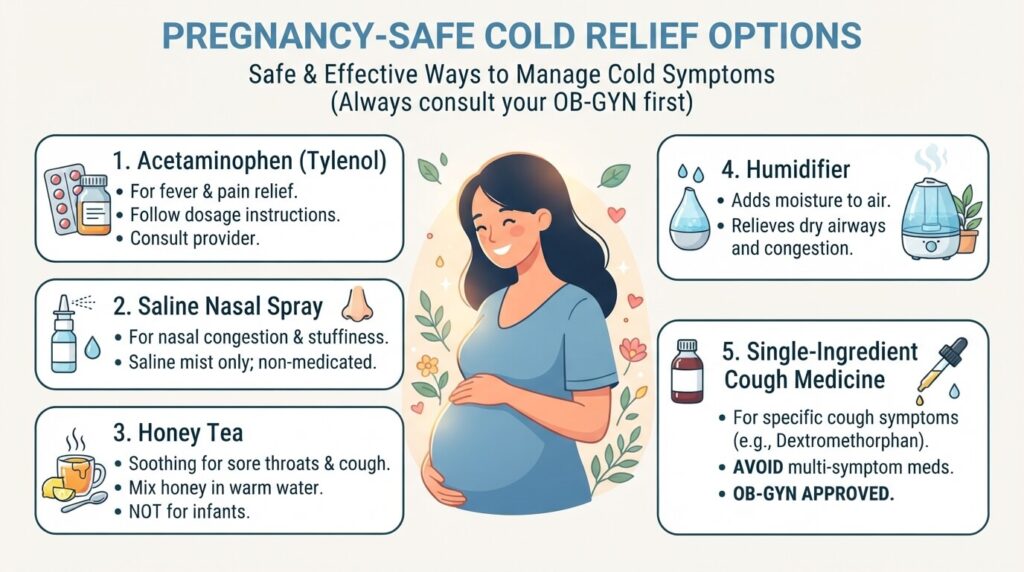
- Acetaminophen (Tylenol) is the go-to option in all three trimesters for headache, fever, and body aches, generally capped around 3,000 mg in 24 hours unless your provider tells you otherwise.
Cough
- Dextromethorphan (found in plain Robitussin, avoid alcohol-containing versions) is typically used to suppress a dry, hacking cough.
- Guaifenesin (plain Mucinex) thins mucus so a chest cough becomes more productive; most sources recommend waiting until after the first trimester to use it.
- A spoonful of real honey in warm tea is a legitimate, low-risk alternative for nighttime cough.
Congestion and runny nose
- Diphenhydramine (Benadryl) and chlorpheniramine (Chlor-Trimeton) are the antihistamines most often cited as safe throughout pregnancy, though both can cause drowsiness.
- Loratadine (Claritin) is commonly used for allergy-type congestion, though it’s better studied for allergies than for cold symptoms specifically.
- Saline nasal spray or rinse works immediately and has no medication-related restrictions at any point in pregnancy.
- Short-term oxymetazoline nasal spray (Afrin) used for no more than three days is an option. Some providers allow, since minimal amounts. Reach the bloodstream through the nose.
Sore throat
- Acetaminophen, warm salt-water gargles, and sugar-free lozenges (checked for aspartame if you have gestational diabetes) are the standard combination.

Cold Medications and Ingredients to Avoid While Pregnant
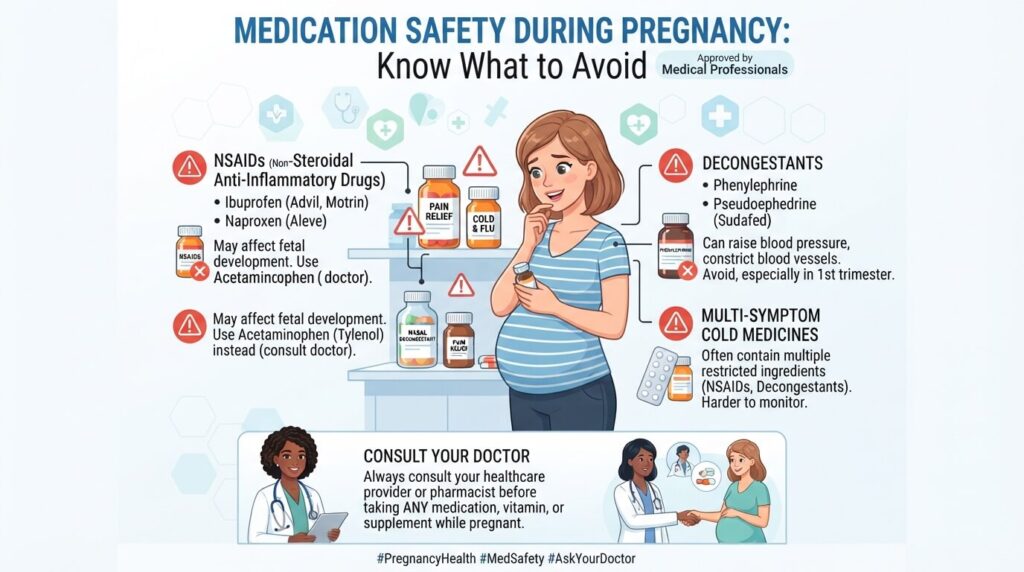
- NSAIDs — ibuprofen (Advil, Motrin), naproxen (Aleve), and aspirin are best avoided, especially from around 20 weeks onward, due to risks to fetal kidney function and the closure of a blood vessel called the ductus arteriosus later in pregnancy.
- Pseudoephedrine (Sudafed, the “behind-the-counter” version) is generally avoided in the first trimester and used only with provider approval afterward, since it constricts blood vessels and has been linked in some studies to a small increase in certain birth defects when used early on.
- Phenylephrine (Sudafed PE and most “PE” labeled products) is typically advised against throughout pregnancy.
- Codeine and other opioid-containing cough suppressants aren’t recommended — they aren’t reliably effective for cough and add unnecessary opioid exposure.
- Multi-symptom, all-in-one formulas like NyQuil, DayQuil, or Mucinex FastMax often combine several of the above, plus alcohol in liquid versions, so it’s easy to take an ingredient you don’t actually need.
- Extended-release (“SA”) formulations are usually skipped in favor of immediate-release, single-ingredient products so dosing is easier to control.
Natural and Non-Drug Remedies That Actually Help
Medication isn’t the only lever you have, and several low-risk home remedies are backed by real evidence:
- Saline nasal spray or a neti pot to thin mucus and ease congestion.
- A cool-mist humidifier in the bedroom to keep nasal passages from drying out overnight.
- Warm salt-water gargles (about ¼–½ teaspoon of salt per 8 ounces of water) for a sore throat.
- A spoonful of honey in warm tea for cough — skip this if you’re managing gestational diabetes without checking your plan first.
- Elevating your head with an extra pillow to reduce nighttime congestion and coughing.
- Staying ahead of fluids and rest, which supports your immune system more than any single remedy.
Cold vs. Flu vs. COVID-19: Why It Matters
A stuffy nose and sore throat that come on gradually usually point to a cold. A fever that spikes quickly, severe body aches, chills, and extreme fatigue point more toward flu or COVID-19 — both of which carry higher risks in pregnancy and are worth a call to your provider early, since antiviral treatment is most effective when started promptly.
When to Call Your Doctor
Reach out the same day if you have:
- A fever of 100.4°F (38°C) or higher
- Shortness of breath, chest pain, or wheezing
- A cough producing thick, yellow-green mucus
- Symptoms lasting more than 10 days without improvement
- Decreased fetal movement, contractions, or vaginal bleeding alongside your cold symptoms
Quick-Reference Comparison Table
| Symptom | Generally Considered Safe | Generally Avoided |
|---|---|---|
| Fever / body aches | Acetaminophen (Tylenol) | Ibuprofen, naproxen, aspirin |
| Cough | Dextromethorphan, guaifenesin (after 1st trimester), honey | Codeine-based suppressants |
| Congestion | Saline spray, diphenhydramine, chlorpheniramine, short-term oxymetazoline | Pseudoephedrine (1st trimester), phenylephrine |
| Sore throat | Acetaminophen, salt-water gargle, lozenges | Numbing throat sprays with high alcohol content |
| Multi-symptom relief | Single-ingredient products matched to your actual symptoms | NyQuil, DayQuil, Mucinex FastMax, other combination formulas |
This table is a general reference, not medical advice — confirm any medication with your OB, midwife, or pharmacist before taking it.
The Takeaway
A cold during pregnancy is uncomfortable but rarely dangerous on its own, and you do have real options for relief — acetaminophen, guaifenesin or dextromethorphan for cough, antihistamines for congestion, and simple remedies like saline spray and salt-water gargles. The ingredients to watch for are NSAIDs, pseudoephedrine early on, phenylephrine, and combination formulas that bundle in more than you need. When in doubt about a specific product, a two-minute call to your OB’s office or pharmacist is the safest move. If you’re due for a checkup or want a personalized medication list for your pregnancy, [schedule an appointment with our OB team] or [browse our pregnancy health resources] for more trimester-by-trimester guidance.

FAQ
Q: Can I take NyQuil or DayQuil while pregnant?
A: These are generally discouraged because they’re multi-symptom formulas that often include alcohol (in liquid form). Some versions contain phenylephrine, which most providers advise avoiding in pregnancy. It’s safer to choose single-ingredient products for the specific symptom you have.
Q: Is it safe to take Sudafed while pregnant?
A: Plain pseudoephedrine (Sudafed) is typically avoided in the first trimester and used only with your provider’s approval in the second and third. Sudafed PE, which contains phenylephrine, is generally avoided throughout pregnancy.
Q: Can I take Mucinex while pregnant?
A: Plain guaifenesin (Mucinex) is considered acceptable by most providers after the first trimester, taken as directed with plenty of water. Combination products like Mucinex FastMax are best avoided since they bundle in other ingredients.
Q: What cold medicine is safe in the first trimester?
A: Acetaminophen for aches and fever, diphenhydramine or chlorpheniramine for congestion, and saline nasal spray are among the options most commonly considered acceptable in the first trimester. Confirm timing and dosing with your provider.
Q: Can a cold hurt my baby?
A: A typical common cold is unlikely to affect your baby directly, since it’s a self-limited viral illness your immune system clears on its own. The bigger concern is usually the medications used to manage symptoms, not the cold itself.
Q: What natural remedies help a cold during pregnancy?
A: Saline nasal spray, a cool-mist humidifier, warm salt-water gargles, honey in tea, and staying well-hydrated and rested are commonly recommended, low-risk options that don’t involve medication.
Q: When should I call my doctor about a cold while pregnant?
A: Call the same day if you develop a fever of 100.4°F or higher, chest pain or shortness of breath, thick discolored mucus, symptoms lasting more than 10 days, or any change in fetal movement or bleeding.