
If you’ve started sweating through your sheets, soaking your gym shirt faster than usual, or noticing clammy palms since going on the pill, you’re not imagining it. Yes, birth control can make you sweat more, and for a specific, explainable reason: synthetic hormones change the temperature your body treats as “normal,” which shifts when and how much you sweat.
This isn’t a rare, freak reaction. It’s a documented physiological response tied to how progestin and estrogen interact with your internal thermostat. Below, we’ll walk through exactly why it happens, which birth control methods are more likely to cause it, how long it typically lasts, and what actually helps — beyond the generic “drink more water” advice you’ve probably already tried.
The Short Answer
Hormonal birth control — pills, the patch, the ring, the shot, and hormonal IUDs — can increase sweating, night sweats, and hot flash-like episodes in some users. This happens most often in the first one to three months of starting a method, right after switching formulations, or in the days after stopping hormonal contraception altogether.
Progestin-dominant methods (the mini-pill, hormonal IUDs, the shot) tend to raise baseline body temperature more than estrogen-heavy combination pills, which is the opposite of what most people assume.
Why Hormonal Birth Control Increases Sweating
Your Hypothalamus Is Running the Show
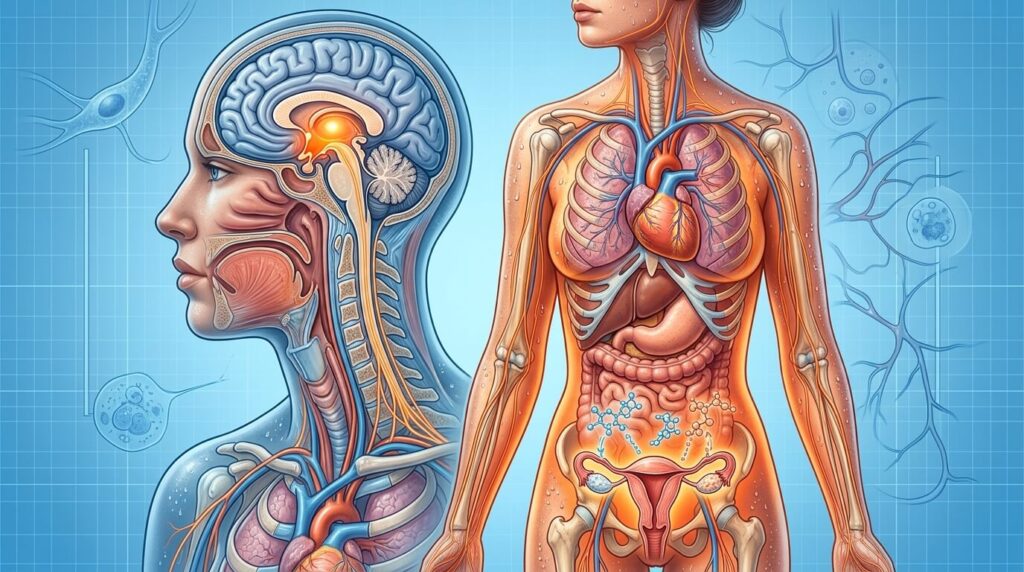
The hypothalamus acts as your body’s internal thermostat. It keeps your core temperature inside a narrow comfort range — roughly 97.7°F to 99.5°F — by triggering sweating, flushing, or shivering the moment you drift outside that range.
Estrogen and progesterone both talk to this thermostat. Progesterone in particular raises your core body temperature by about 0.5°F during the natural luteal phase of your cycle — the same rise that basal body temperature trackers use to confirm ovulation.
Synthetic Progestin Mimics the Luteal Phase — All Month Long
Combination pills, progestin-only pills, implants, hormonal IUDs, and the birth control shot all deliver synthetic progestins that mimic this luteal-phase temperature bump. The difference is that instead of a temporary rise for one to two weeks, your body can sit in this slightly elevated state continuously.
Research on oral contraceptive users has found consistently higher core body temperatures across the full 24-hour cycle compared to people with unmedicated natural cycles — including during the placebo week, when synthetic hormones are technically paused. That lingering effect is a big reason sweating doesn’t necessarily improve just because you’re in a hormone-free week.
A Narrower “Thermoneutral Zone”
Estrogen widens what’s called the thermoneutral zone — the range of temperatures your body tolerates without triggering a cooling response. When estrogen levels fluctuate sharply (which happens when you start, stop, or switch formulations), that zone narrows temporarily. A change in core temperature as small as 0.8°F can be enough to trigger an exaggerated sweat response, which is why some people describe waking up drenched even in a cool room.
Cortisol and Blood Sugar Can Pile On
Some users experience mild increases in cortisol or blood sugar sensitivity on hormonal birth control, both of which independently promote sweating. This is less well established than the temperature mechanism above, but it’s frequently reported and worth mentioning to your provider if lifestyle fixes alone aren’t working.
Daytime Sweating vs. Night Sweats on Birth Control
Most existing content on this topic focuses only on night sweats, but daytime sweating changes are just as common and worth separating out:
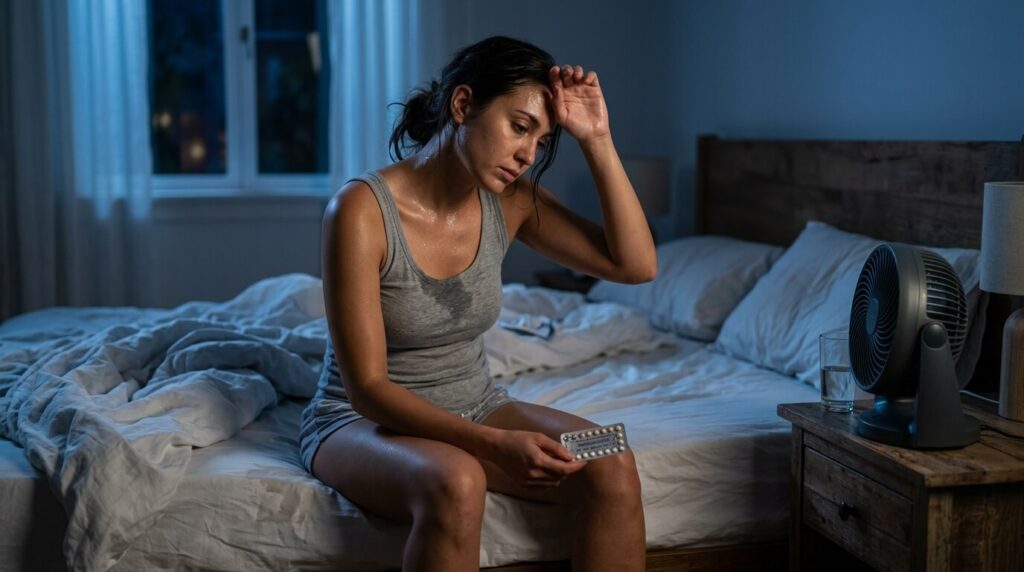
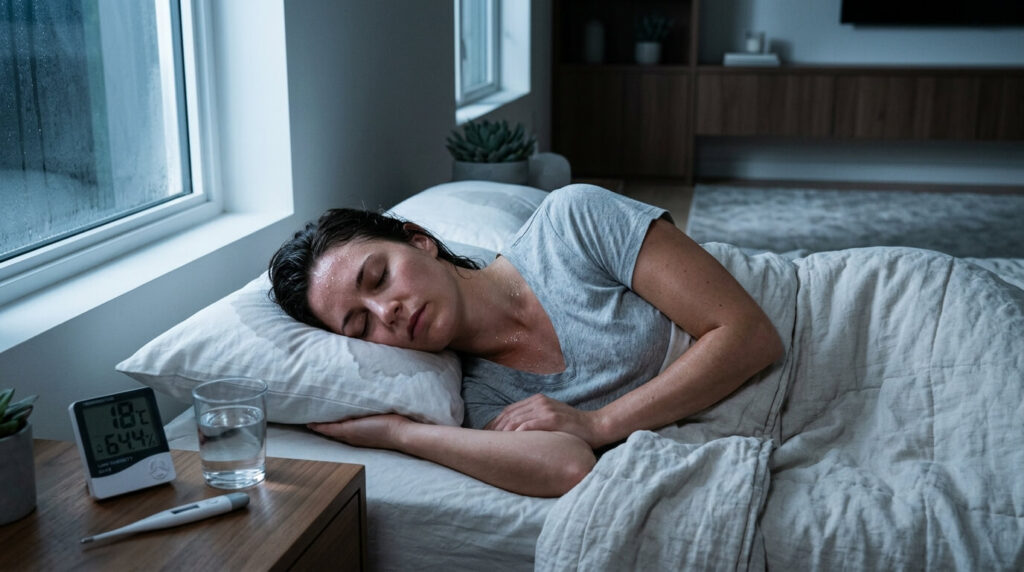
- Night sweats: Usually tied to the natural drop in core body temperature that happens as you enter deep sleep. On birth control, an already-elevated baseline temperature makes that dip trigger a stronger cooling (sweating) response.
- Daytime sweating: More often shows up as increased underarm sweating, a lower threshold for feeling overheated during exercise, or sweating through makeup faster than before starting the method.
- Exercise-related sweating: Because your resting core temperature is already slightly higher, you may hit your “start sweating” threshold sooner during a workout — this is a common, underreported complaint among people newly starting hormonal birth control.
Does the Type of Birth Control Matter?
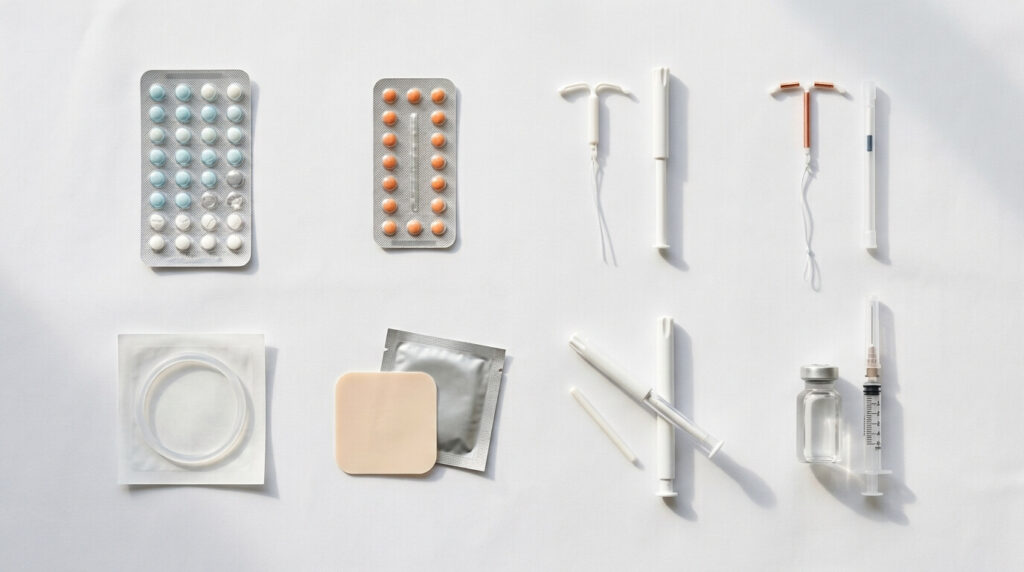
Not all methods affect sweating equally. Here’s how the most common options compare, based on hormone dose and delivery method:
| Method | Hormone Type | Sweating Likelihood | Notes |
|---|---|---|---|
| Combination pill | Estrogen + progestin | Moderate | Higher-estrogen formulations may cause more fluctuation-related sweating |
| Progestin-only pill (mini-pill) | Progestin only | Moderate–High | Continuous progestin exposure without estrogen’s temperature-buffering effect |
| Hormonal IUD (Mirena, Kyleena, etc.) | Progestin only, low-dose, localized | Low–Moderate | Systemic absorption is lower, but some users still report sweating in the first months |
| Birth control shot (Depo-Provera) | Progestin only, high-dose | Moderate–High | Longer-acting dose means side effects can persist longer if they occur |
| Birth control implant (Nexplanon) | Progestin only | Low–Moderate | Similar to the shot but lower, steadier dosing |
| Vaginal ring / patch | Estrogen + progestin | Moderate | Similar profile to combination pills |
| Copper IUD | Hormone-free | Unlikely to cause hormonal sweating | Useful comparison point for those wanting to rule birth control out |
If sweating is disrupting your life, this table is a useful starting point for a conversation with your OB-GYN about switching formulations — not a reason to stop your method on your own. What does pregnancy nausea feel like?
Can Birth Control Make You Sweat More? Real Answers
How Long Does Birth-Control-Related Sweating Last?
This is the part most articles skip, and it matters for setting expectations:
- Starting a new method: Sweating and night sweats most commonly appear in the first 4 to 12 weeks as your body adjusts to a new hormonal baseline.
- Switching formulations: Symptoms can reappear temporarily, usually resolving within 4 to 8 weeks.
- Stopping hormonal birth control: As your body resumes natural hormone production, some people experience a short window — typically 2 to 3 months — of mini-menopause-like symptoms, including night sweats, as estrogen and progesterone find their new rhythm.
If sweating hasn’t improved after 3 months on a stable method, that’s a reasonable point to bring it up with your provider rather than waiting it out indefinitely.
Real Experiences: This Isn’t Just “In Your Head”
People frequently describe this side effect in almost identical terms across health forums and patient communities: waking up soaked through their sheets within weeks of starting a pill, sweating episodes clustering in the final week of their pack, or sweating persisting for weeks after stopping a method entirely.
Anecdotal reports aren’t clinical proof, but the consistency of these accounts — combined with the known temperature effects of progestin and estrogen — is why more OB-GYNs are starting to mention sweating as a possible, if underdiscussed, side effect during counseling.
Other Causes You Should Rule Out First
Before assuming birth control is the sole cause, it’s worth ruling out other common triggers, especially if sweating is severe, sudden, or accompanied by other symptoms:
- Thyroid disorders — hyperthyroidism speeds up metabolism and raises body heat.
- Perimenopause — possible even in your late 30s if you have irregular cycles alongside the sweating.
- Anxiety or panic disorders — nocturnal panic attacks can cause sudden sweating and a racing heart.
- Sleep apnea — up to a third of women with unexplained night sweats are eventually diagnosed with a sleep disorder.
- Other medications — SSRIs, certain blood pressure drugs, and some pain medications independently cause sweating (drug-induced hyperhidrosis) and can compound the effect if you’re on both.
- Infections or blood sugar issues — persistent, drenching night sweats with fever, weight loss, or fatigue warrant prompt medical evaluation, not a wait-and-see approach.

How to Manage Sweating Caused by Birth Control
1. Give It Time — With a Deadline
Mild sweating in the first 4 to 8 weeks of a new method is common and often self-resolves. Track it. If it hasn’t meaningfully improved by week 12, that’s your cue to revisit the conversation with your provider rather than assuming it’s permanent.
2. Talk to Your Provider About Formulation
A lower-estrogen combination pill, a switch away from a progestin-only method, or a non-hormonal option like the copper IUD are all reasonable things to discuss if sweating is significantly affecting your sleep or confidence.
3. Adjust Your Sleep Environment
- Keep your bedroom between 60–67°F.
- Choose moisture-wicking sleepwear and breathable cotton or bamboo sheets.
- Use a fan for consistent airflow rather than relying on air conditioning cycling on and off.
4. Watch Evening Habits
Alcohol, caffeine, and spicy food in the evening all independently raise core temperature and can stack on top of hormone-driven sweating. Evening workouts within an hour or two of bedtime have the same effect — moving exercise earlier in the day can help.
5. Track Your Symptoms Before Your Appointment
Bring your provider specifics, not just “I sweat a lot now.” Note the time of night, room temperature, cycle day, and any other symptoms for two to four weeks. This turns a vague complaint into something your doctor can actually act on.
FAQ
Does the birth control pill cause hot flashes?
Some users describe sudden warmth or flushing similar to a hot flash, especially during the placebo week when hormone levels drop. This is related to the same temperature-regulation mechanism behind night sweats, though true hot flashes are more commonly associated with perimenopause and menopause.
Will switching to a lower-dose pill stop the sweating?
It often helps, since lower-estrogen formulations cause less dramatic hormonal fluctuation, but response varies by individual. A progestin-only method may work better for one person and worse for another — this is genuinely trial and error alongside your provider.
Can birth control cause excessive sweating in your sleep only, not during the day?
Yes, this is common because your core temperature naturally dips as you enter deep sleep. If your baseline temperature is already elevated from synthetic hormones, that dip can trigger a stronger-than-normal sweating response specifically at night.
Does stopping birth control make sweating worse before it gets better?
For some people, yes. As natural hormone production resumes, there’s often a temporary window of hormonal fluctuation — sometimes called a “mini-menopause” effect — that can include night sweats for roughly 2 to 3 months.
Is it normal to sweat more during workouts after starting birth control?
It can be. A slightly higher resting core temperature means you may reach your sweating threshold sooner during exercise. This isn’t dangerous on its own, but pay attention to hydration and how you feel overall.
When should I see a doctor about sweating on birth control?
See your provider if sweating persists beyond 3 months on a stable dose, is drenching enough to disrupt sleep or daily activities, or comes with unexplained weight loss, fever, swollen lymph nodes, or extreme fatigue — those symptoms point to something beyond your birth control and deserve prompt evaluation.
The Bottom Line
Birth control can make you sweat more, and the mechanism behind it is well understood: synthetic progestin and estrogen shift your body’s temperature baseline and narrow the range your hypothalamus considers “normal.” For most people, this settles down within a few months, whether you’re starting a new method, switching formulations, or coming off hormonal birth control entirely.
If sweating is affecting your sleep, your confidence, or your daily routine, don’t just push through it. Track your symptoms, rule out other causes, and bring specifics to your OB-GYN — a formulation change is often all it takes to get comfortable again.