
If you’re searching for what pregnancy nausea actually feels like, you’ve probably already noticed it doesn’t match the tidy “morning sickness” label. It can hit at 3 p.m. as easily as 7 a.m., and it rarely feels like typical stomach upset. Roughly 70–90% of pregnant people experience some form of nausea in early pregnancy, and understanding exactly what it feels like — and why — can make the first trimester a lot less disorienting.
Here’s a clear, sensation-by-sensation breakdown of what to expect, how long it tends to last, and what actually helps.
What Pregnancy Nausea Actually Feels Like (Beyond “Queasy”)
Most descriptions stop at “queasy,” but pregnancy nausea shows up in a few distinct ways, and most people experience more than one pattern.
The Physical Sensations, Described
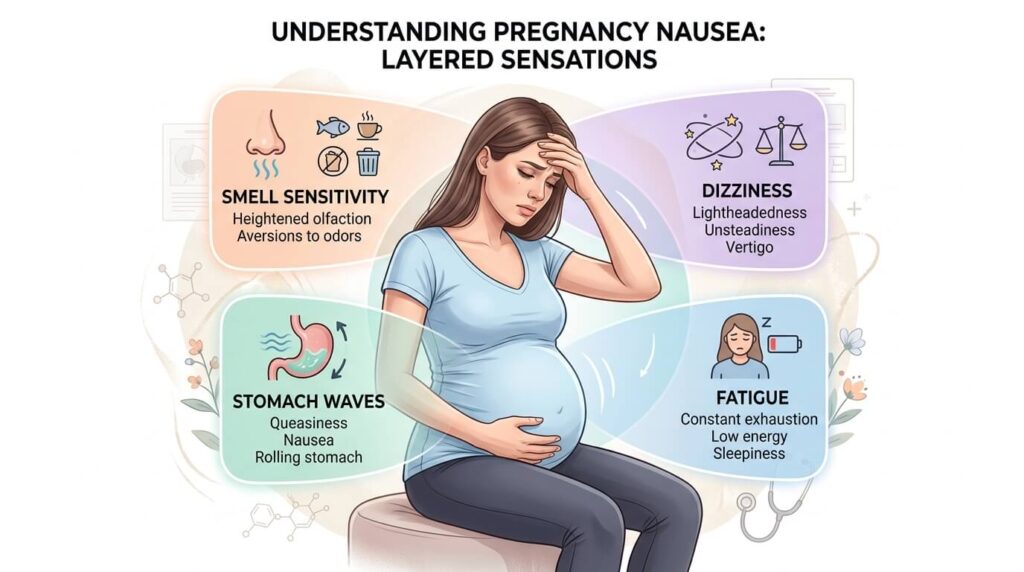
- A low, persistent queasiness — a background hum of “off” that sits in your stomach or throat without necessarily peaking into vomiting.
- Sudden waves — nausea that seems to come from nowhere, often triggered by a smell (coffee, cooking meat, perfume), a texture, or even a thought.
- Hungry but repulsed — an unusual sensation where your stomach signals hunger, but the idea of eating anything makes it worse. This “empty but nauseated” loop is one of the most commonly reported and least talked-about parts of early pregnancy.
- Excess saliva (ptyalism) — a wet-mouth, almost pre-vomit sensation that can show up even without nausea progressing further.
- Dizziness or lightheadedness, especially when standing up quickly, often layered on top of the nausea itself.
- Heightened smell and taste sensitivity — foods you used to love can suddenly taste metallic or “wrong,” and mild smells can feel overwhelming.

Nausea Without Vomiting Is Still Normal
A large share of pregnant people feel nauseated for weeks without ever vomiting. If you’re constantly queasy but not throwing up, that’s a completely normal presentation of pregnancy nausea — vomiting frequency isn’t a measure of how “real” or serious your symptoms are.
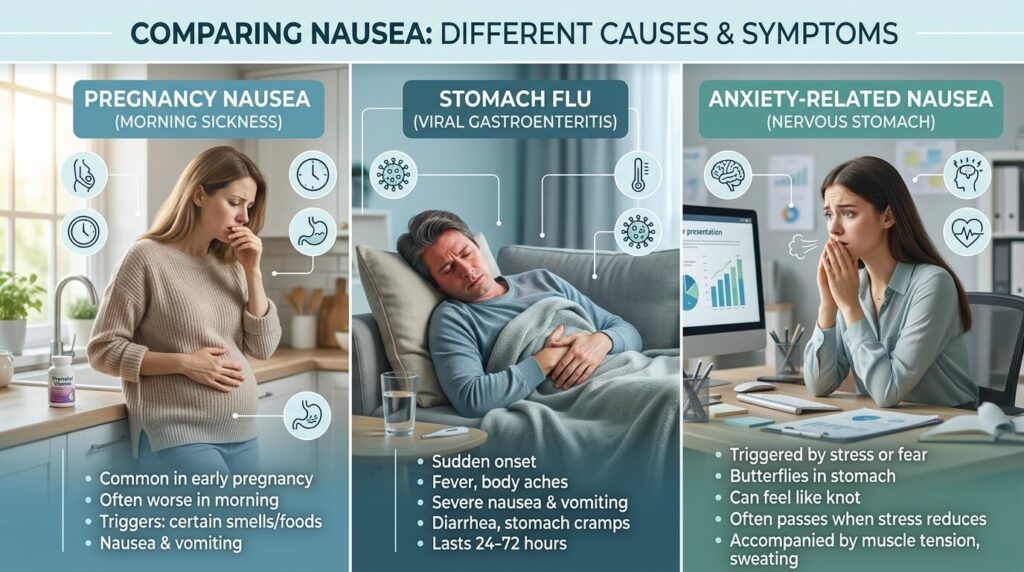
Pregnancy Nausea vs. Regular Nausea — How to Tell the Difference
| Feature | Pregnancy Nausea | Stomach Bug / Food Poisoning | Anxiety-Related Nausea |
|---|---|---|---|
| Onset | Gradual, over days to weeks | Sudden, within hours of exposure | Tied to specific stressors or triggers |
| Duration | Weeks to months | Usually resolves in 24–72 hours | Comes and goes with stress |
| Triggers | Smells, empty stomach, certain foods | Contaminated food/water, close contact with illness | Situational stress, worry |
| Other symptoms | Breast tenderness, fatigue, missed period | Fever, diarrhea, cramping | Racing heart, tight chest, restlessness |
| Pattern | Worse on empty stomach, eases somewhat with small meals | Often worsens with any food | Improves once the stressor passes |
If nausea appears alongside a missed period, breast tenderness, or unusual fatigue — and doesn’t resolve within a few days — a pregnancy test is a reasonable next step.
When Does Pregnancy Nausea Start, Peak, and End?
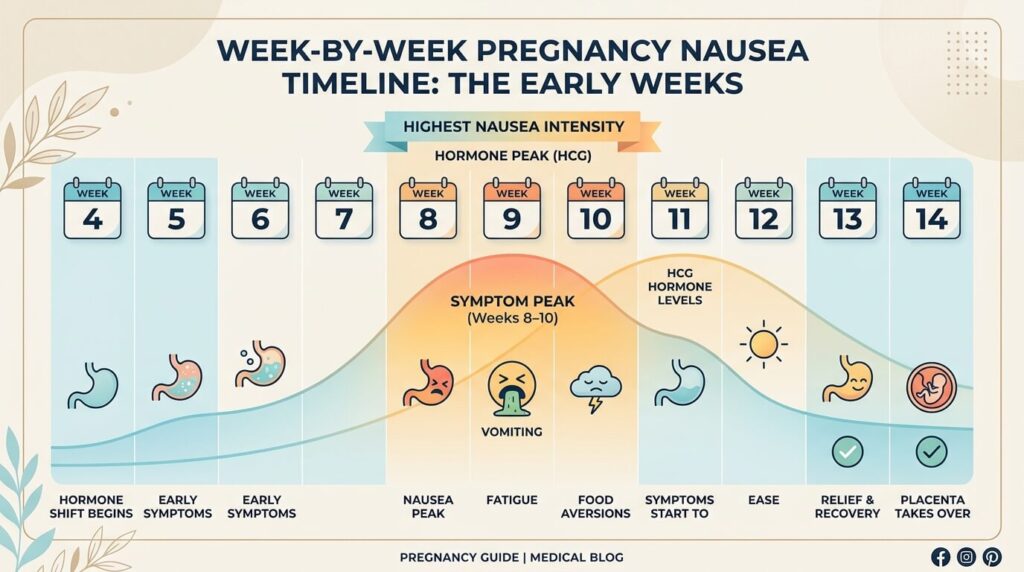
Timing follows a fairly consistent hormonal arc, though individual experience varies widely.
Nausea Timeline by Week
| Week Range | What’s Typically Happening |
|---|---|
| Weeks 4–6 | Nausea often begins, sometimes as early as the week a period is missed |
| Weeks 6–9 | Symptoms intensify; food aversions and smell sensitivity increase |
| Weeks 8–10 | Peak intensity for most people |
| Weeks 12–14 | Gradual improvement as the placenta takes over hormone production |
| Second trimester+ | Most people see significant relief; a smaller group has lingering or recurring nausea |
For about 1–2% of pregnancies, nausea is severe enough to be classified as hyperemesis gravidarum, which can extend well beyond the first trimester (see below).
What Causes That Nauseated Feeling in Pregnancy?
The leading driver is a rapid rise in human chorionic gonadotropin (hCG), the hormone that also shows up on pregnancy tests. hCG climbs quickly in early pregnancy and appears to affect the areas of the brain that regulate nausea. Rising estrogen compounds the effect, and pregnancy hormones also slow gastric emptying — which is part of why an empty stomach can make nausea worse rather than better.
People carrying twins or multiples often report more intense nausea, likely tied to higher circulating hCG levels. Genetics, prior pregnancy history, and individual hormone sensitivity all play a role too, which is why two people at the same stage of pregnancy can have completely different experiences.
When Nausea Might Be Something More: Hyperemesis Gravidarum
Hyperemesis gravidarum (HG) is a distinct, more severe condition — not just “bad morning sickness.” Signs that nausea has crossed into HG territory include:
- Inability to keep down food or liquids for 24+ hours
- Losing more than 5% of pre-pregnancy body weight
- Signs of dehydration: dark urine, dizziness, rapid heartbeat
- Vomiting multiple times per day, every day, for more than a week
HG typically requires medical management — sometimes IV fluids, anti-nausea medication, or in more severe cases, hospitalization. It is not something to try to push through alone.
How to Find Relief When Nausea Hits
No single remedy works for everyone, but these approaches are the most consistently reported to help:
- Eat before you’re hungry. An empty stomach tends to make nausea worse — small, frequent snacks (crackers, toast) can help more than three big meals.
- Separate fluids from meals. Sipping liquids between meals, rather than during them, can reduce that overly-full, queasy sensation.
- Try ginger. Ginger tea, chews, or candies are among the most studied natural options for pregnancy nausea.
- Time your prenatal vitamin differently. Taking it at night with a small snack, or switching to a gummy formulation, can reduce vitamin-triggered nausea.
- Air out your space. Since smell sensitivity is a major trigger, fresh air or a fan can meaningfully cut down on nausea episodes.
- Ask about vitamin B6. Many providers recommend B6 supplementation as a first-line, non-prescription option — check dosing with your provider before starting.
When to Call Your Healthcare Provider
Reach out if you experience:
- Inability to keep any food or fluids down for a full day
- Signs of dehydration (dark urine, dizziness, dry mouth)
- Weight loss
- Nausea that suddenly worsens later in pregnancy (which can, in rare cases, signal something unrelated to typical morning sickness and warrants evaluation)
FAQ
What does pregnancy nausea feel like in the first few days?
Often a subtle, low-grade queasiness rather than a dramatic symptom — many people describe it as “off” or mildly seasick before it becomes more noticeable over the following one to two weeks.
Is it normal to have nausea without vomiting during pregnancy?
Yes. A large portion of pregnant people experience nausea that never progresses to vomiting, and this is considered a normal, common presentation.
How can you tell pregnancy nausea apart from a stomach bug?
Stomach bugs tend to come on suddenly and resolve within a few days, often with fever or diarrhea. Pregnancy nausea builds gradually, lasts weeks, and is frequently accompanied by other early pregnancy signs like breast tenderness or fatigue.
When does pregnancy nausea usually start and peak?
Most people notice symptoms starting around weeks 4–6, with intensity peaking around weeks 8–10 before easing by weeks 12–14.
Does pregnancy nausea mean the pregnancy is healthy?
Nausea is associated with rising pregnancy hormones, but its absence doesn’t indicate a problem — many people have entirely healthy pregnancies with little to no nausea.
What’s the difference between morning sickness and hyperemesis gravidarum?
Morning sickness is common and generally manageable with diet and lifestyle changes. HG involves severe, persistent vomiting that leads to weight loss and dehydration and typically requires medical treatment.
Can you have a healthy pregnancy with no nausea at all?
Yes. Roughly 10–30% of pregnant people experience little to no nausea, and this is not linked to a higher risk of complications.
What helps pregnancy nausea fast, in the moment?
Small bites of a plain carbohydrate (crackers, toast), fresh air, and sipping cold water or ginger tea tend to bring the quickest relief for an active wave of nausea.
Final Thoughts
Pregnancy nausea rarely looks the way its “morning sickness” nickname suggests — it’s more often a shifting mix of queasiness, smell sensitivity, and hunger-that-isn’t-hunger that can strike any time of day. Knowing the typical timeline and the difference between ordinary nausea and hyperemesis gravidarum can help you know what’s expected and when it’s time to reach out for support.
If your symptoms feel unmanageable or you’re worried about dehydration, don’t wait it out — [book an appointment] with your care provider to talk through relief options that are safe for you and your baby.