Cramping and brown discharge in early pregnancy is common and often harmless. Learn the causes, warning signs, and when to call your doctor. If you’ve just found out you’re pregnant and noticed cramping along with brown discharge, your first instinct is probably panic. Take a breath — for most people, this combination is one of the most common early pregnancy experiences, and it’s frequently nothing more than your body adjusting to a brand-new hormonal and physical reality.
Brown discharge is essentially old blood that has taken extra time to leave the uterus and has oxidized along the way, much like how a cut darkens as it dries. Mild cramping in the first trimester is also extremely common as the uterus stretches and the corpus luteum produces progesterone. Together, these two symptoms often show up around the time implantation occurs — but they can also, less commonly, point to something that needs medical attention, such as an ectopic pregnancy or a miscarriage.
This guide walks through every cause of cramping and brown discharge in early pregnancy, how to tell normal symptoms from warning signs, what your doctor may check, and practical steps you can take while you wait to be seen. It’s the most complete resource you’ll find on this topic — but it is not a substitute for a conversation with your OB-GYN or midwife, who can examine you and order the tests needed to confirm what’s happening.

Quick Answer: Is It Normal?
In most cases, yes. Light brown spotting with mild, period-like cramping in the first trimester is usually related to implantation, hormonal shifts, or cervical sensitivity. It becomes a concern when the discharge turns bright red or heavy, when cramping is severe or one-sided, or when other symptoms — fever, dizziness, shoulder pain, fainting, or passing clots or tissue — appear alongside it.
| Likely Normal | Seek Medical Care |
|---|---|
| Light brown or pink spotting that lasts a few hours to 2–3 days | Bright red bleeding or soaking through a pad in an hour |
| Mild, dull, period-like cramping that comes and goes | Severe, sharp, constant, or one-sided pelvic/abdominal pain |
| No odor, fever, or dizziness | Foul-smelling discharge, fever above 100.4°F (38°C), chills |
| Occurs after sex, a pelvic exam, or exercise | Passing clots or grayish/tissue-like material |
| Resolves on its own within a couple of days | Shoulder-tip pain, fainting, or feeling lightheaded |
| Happens early, around 6–12 days after conception | Bleeding plus cramping that worsens over hours |
If anything in the right-hand column applies to you, contact your healthcare provider right away or go to an emergency or urgent care setting rather than waiting for a scheduled appointment.
Why Brown Discharge Happens in Early Pregnancy
Brown discharge is simply blood that has had time to oxidize before leaving the body. The darker and older the blood, the browner it appears — ranging from light tan to a deep coffee-ground color. Because the cervix and surrounding tissue become more vascular (richer in blood vessels) during pregnancy, even very minor irritation can lead to small amounts of blood mixing with normal vaginal secretions.
Why Cramping Often Comes Along With It
Mild lower-abdominal cramping in early pregnancy is common even without any bleeding at all. As the fertilized egg implants and the uterus begins to stretch and grow, many people feel sensations similar to mild menstrual cramps — a dull ache, pulling, or tightening low in the abdomen. When this overlaps with the same hormonal shifts that produce brown spotting, the two symptoms frequently appear together purely by coincidence of timing, not because one is causing the other.
Cramping And Brown Discharge Early Pregnancy
Common Causes of Cramping and Brown Discharge in Early Pregnancy
1. Implantation Bleeding and Cramping
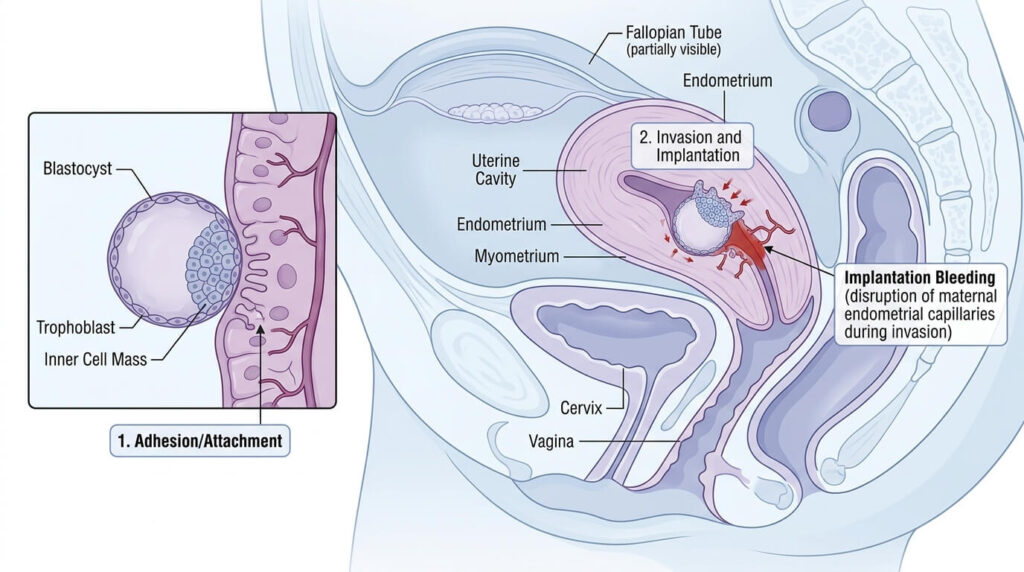
One of the earliest and most frequent causes is implantation, which happens when the fertilized egg burrows into the uterine lining, typically 6–12 days after ovulation — often right around the time a period would have started. This can cause:
- Light pink or brown spotting (not a heavy flow)
- Spotting that lasts a few hours up to about 3 days
- Mild cramping that feels lighter than typical period cramps
- Occasional accompanying symptoms like breast tenderness or fatigue
Not everyone experiences implantation bleeding, and its absence does not mean anything is wrong. When it does occur, it’s generally considered a normal, self-limited part of early pregnancy.
2. Hormonal Changes
Rising levels of progesterone and human chorionic gonadotropin (hCG) increase blood flow to the pelvic area and soften the cervix. This added sensitivity can cause small amounts of old blood to be released as brown discharge, sometimes paired with mild cramping as the uterine lining adjusts.
3. Cervical Sensitivity or Minor Trauma
The cervix becomes softer and more vascular in pregnancy, which makes it more prone to light bleeding after:
- Sexual intercourse
- A pelvic exam or Pap smear
- Straining during a bowel movement
- Vigorous exercise
This is usually a one-off occurrence, resolves within a day or two, and isn’t a sign of harm to the pregnancy.
4. Subchorionic Hematoma
A subchorionic hematoma is a small pocket of blood that collects between the uterine wall and the gestational sac. It’s a fairly common finding on early ultrasounds and can cause brown discharge or light bleeding, sometimes with mild cramping. Most small subchorionic hematomas resolve on their own without harming the pregnancy, though your provider may recommend pelvic rest or follow-up ultrasounds depending on its size and location.
5. Urinary Tract or Vaginal Infection
Infections such as a urinary tract infection (UTI), yeast infection, or bacterial vaginosis can cause irritation that leads to brown discharge, and the resulting inflammation can sometimes trigger cramping as well. Other clues include:
- Burning with urination
- Itching or unusual odor
- A change in discharge texture or color (white, yellow, or green in addition to brown)
These infections are treatable with medication appropriate for pregnancy, so it’s worth getting tested rather than waiting it out.
6. Sexually Transmitted Infections (STIs)
Infections like chlamydia or gonorrhea can cause brown discharge, spotting after sex, and pelvic discomfort or cramping. Because untreated STIs can affect pregnancy outcomes, your provider will likely screen for these at your first prenatal visit, and treatment (often antibiotics considered safe in pregnancy) should be started promptly if positive.
7. Ectopic Pregnancy (Needs Prompt Evaluation)
An ectopic pregnancy occurs when the fertilized egg implants outside the uterus — most often in a fallopian tube. It cannot develop normally and becomes a medical emergency if the tube ruptures. Warning signs include:
- Sharp, persistent, or one-sided lower abdominal pain
- Brown discharge or spotting that doesn’t fit the “light and brief” pattern
- Pain in the shoulder tip (a sign of internal bleeding irritating the diaphragm)
- Dizziness, fainting, or a rapid heartbeat
Because early ectopic pregnancy can otherwise look similar to a normal early pregnancy, any combination of one-sided pain and abnormal bleeding should be evaluated quickly with blood tests (hCG levels) and an ultrasound.
8. Miscarriage
Most miscarriages happen in the first trimester, and the majority occur before 10 weeks of pregnancy. Brown discharge with cramping can be an early sign, especially if it progresses to:
- Brighter red, heavier bleeding
- Passing clots or tissue
- Cramping that intensifies and becomes more period-like or stronger
- Loss of other pregnancy symptoms (like sudden resolution of nausea or breast tenderness)
It’s important to know that light spotting with mild cramping does not automatically mean a miscarriage is happening — many pregnancies with these symptoms continue normally. Your provider can check hCG trends and ultrasound findings to assess what’s going on.
9. Molar Pregnancy (Rare)
A molar pregnancy is a rare condition where abnormal tissue grows in the uterus instead of a typical pregnancy. It can cause brown or dark red discharge, cramping, and unusually high hCG levels, along with severe nausea. It’s diagnosed by ultrasound and blood work and requires specific follow-up care.

When Cramping and Brown Discharge Are a Medical Emergency
Call your OB-GYN, midwife, or go to urgent/emergency care immediately if you experience any of the following:
- Bleeding that turns bright red, heavy, or fills more than one pad an hour
- Passing clots or grayish tissue
- Severe, sharp, or one-sided abdominal or pelvic pain
- Pain in the tip of the shoulder
- Fever over 100.4°F (38°C) or chills
- Dizziness, fainting, or a racing heartbeat
- Foul-smelling discharge accompanied by itching or burning
- Symptoms that are rapidly worsening over a few hours
These signs don’t guarantee a serious problem, but they do mean you need a prompt clinical evaluation rather than a “wait and see” approach.
What to Expect at the Doctor’s Office
If you call your provider about cramping and brown discharge, they’ll typically want to know:
- How far along you are (based on your last period or a prior dating ultrasound)
- How much bleeding/discharge there is and its color
- Whether the cramping is mild and intermittent or severe and constant
- Any other symptoms (fever, dizziness, shoulder pain, loss of pregnancy symptoms)
- Whether you’ve had recent intercourse, exercise, or a pelvic exam
Depending on your answers, they may ask you to come in for:
- A pelvic exam to check the cervix and rule out local causes of bleeding
- Blood tests for hCG, sometimes repeated 48 hours apart to see if levels are rising appropriately
- A transvaginal ultrasound to confirm the location of the pregnancy and check for a heartbeat, hematoma, or other findings
- Urine and/or vaginal swabs to rule out infection
How to Manage Mild Symptoms at Home
If your provider has confirmed your symptoms are mild and not concerning, the following can help you feel more comfortable while things settle:
- Rest and avoid strenuous exercise or heavy lifting for a day or two
- Avoid intercourse or vaginal douching until the spotting resolves
- Use a panty liner (avoid scented liners) rather than a tampon
- Stay hydrated and avoid straining during bowel movements
- Use a heating pad on a low setting for cramping, if your provider approves
- Track the color, amount, and duration of discharge so you can describe changes accurately
- Take acetaminophen (paracetamol) if needed for cramping, after confirming the dose with your provider — avoid NSAIDs like ibuprofen in pregnancy unless specifically directed
Avoid self-treating with vaginal products, douches, or antibacterial soaps, since some ingredients aren’t recommended during pregnancy and won’t address the underlying cause anyway.
Cramping and Brown Discharge by Week
| Timing | What It Often Means |
|---|---|
| 1–2 weeks after conception | Implantation bleeding/cramping as the embryo attaches to the uterine lining |
| 4–6 weeks | Hormonal surges, cervical sensitivity, or early subchorionic hematoma |
| 6–10 weeks | Higher relative risk window for miscarriage or ectopic pregnancy if symptoms are more pronounced |
| 10–13 weeks | Often related to cervical irritation (sex, exams) as blood flow to the area increases |
This table is a general guide, not a diagnosis — timing alone can’t tell you what’s happening, which is why evaluation matters when symptoms are more than mild.
Common Mistakes to Avoid
- Assuming all bleeding means miscarriage. Light spotting with mild cramping is common and often resolves without any impact on the pregnancy.
- Ignoring one-sided or severe pain. This is the symptom pattern most associated with ectopic pregnancy and shouldn’t be brushed off as “just cramping.”
- Waiting too long to call your provider. Many practices have an on-call line specifically for these situations — use it rather than searching symptoms online for hours.
- Using tampons or douching. Both can introduce bacteria or mask important information your provider needs.
- Self-medicating with NSAIDs. Ibuprofen and similar medications are generally avoided in pregnancy unless your provider says otherwise.
Expert Tips
- Keep a simple log: date, color of discharge, approximate amount, and pain level (1–10). This makes phone triage with your provider faster and more accurate.
- If you’re unsure whether bleeding is heavy, compare it to a normal period — spotting is lighter, while soaking a pad in under an hour is not.
- Don’t rely on a single hCG number to predict outcome; trends over 48 hours are far more informative than one reading.
- If you’ve had a prior ectopic pregnancy, mention this immediately when you call — it changes how quickly you should be seen
Cramping And Brown Discharge Early Pregnancy FAQ
Is brown discharge a sign of pregnancy or a sign something is wrong?
Brown discharge alone is usually neither — it’s old blood leaving the body. In the context of early pregnancy, it’s frequently linked to implantation or cervical sensitivity rather than a problem, but new or worsening symptoms should always be checked.
How long can implantation cramping and spotting last?
Typically a few hours up to about 2–3 days. Cramping is usually mild and spotting is light, not heavy.
Can stress cause brown discharge and cramping in early pregnancy?
Stress itself doesn’t directly cause bleeding, but it can heighten awareness of normal cramping sensations. If stress is significant, mention it to your provider, since they can help address anxiety alongside the physical symptoms.
Does brown discharge mean I’m losing the baby?
Not necessarily. Many pregnancies with brown spotting and mild cramping continue normally. Signs more associated with miscarriage include bright red bleeding, passing clots or tissue, and cramping that intensifies over time.
Should I go to the ER for brown discharge with mild cramping?
If symptoms are mild, calling your OB-GYN or midwife’s office first is usually appropriate — they can advise whether you need same-day evaluation. Go to the ER directly if you have severe pain, heavy bleeding, fainting, or shoulder-tip pain.
Can sex cause brown discharge and cramping in early pregnancy?
Yes — increased blood flow makes the cervix more prone to minor bleeding after intercourse, and mild post-coital cramping is also common. This is generally not harmful but is worth mentioning at your next visit if it persists.
What does an ectopic pregnancy cramp feel like?
Often described as a persistent, sharp, or stabbing pain on one side of the lower abdomen, sometimes accompanied by shoulder pain, dizziness, or fainting. This pattern warrants prompt medical evaluation.
Is it normal to have cramping without any bleeding in early pregnancy?
Yes. Mild, dull cramping as the uterus stretches is common and doesn’t always come with visible discharge.
What color of discharge is most concerning?
Bright red, heavy bleeding is more concerning than light brown spotting. Gray or tissue-like discharge, or discharge with a foul odor, also warrants prompt evaluation.
Can a UTI cause brown discharge and cramping during pregnancy?
Yes, urinary tract infections can cause pelvic discomfort and irritation that contributes to brown discharge, and they’re easily diagnosed with a urine test and treated with pregnancy-safe antibiotics.
Will an ultrasound show why I’m cramping and having brown discharge?
An ultrasound can confirm the location of the pregnancy, check for a heartbeat, and identify findings like a subchorionic hematoma. It can’t always pinpoint the exact cause of cramping, but it rules out the most serious possibilities.
How much bleeding is too much in early pregnancy?
Soaking through a pad within an hour, passing clots, or bleeding that’s as heavy as or heavier than a period are signs to seek care promptly.
Can dehydration cause cramping in early pregnancy?
Mild dehydration can contribute to cramping sensations in general, so staying hydrated is a reasonable, low-risk step while monitoring symptoms.
Is brown discharge with cramping different at 6 weeks vs. 12 weeks?
The underlying causes overlap throughout the first trimester, but the relative likelihood of certain causes (like ectopic pregnancy or early miscarriage) is generally highest in the 6–10 week range, making prompt evaluation especially important during that window.
When should I follow up after a normal evaluation?
If your provider confirms things look fine, they’ll usually schedule a follow-up visit or repeat ultrasound at a typical prenatal interval — but call sooner if new or worsening symptoms appear.