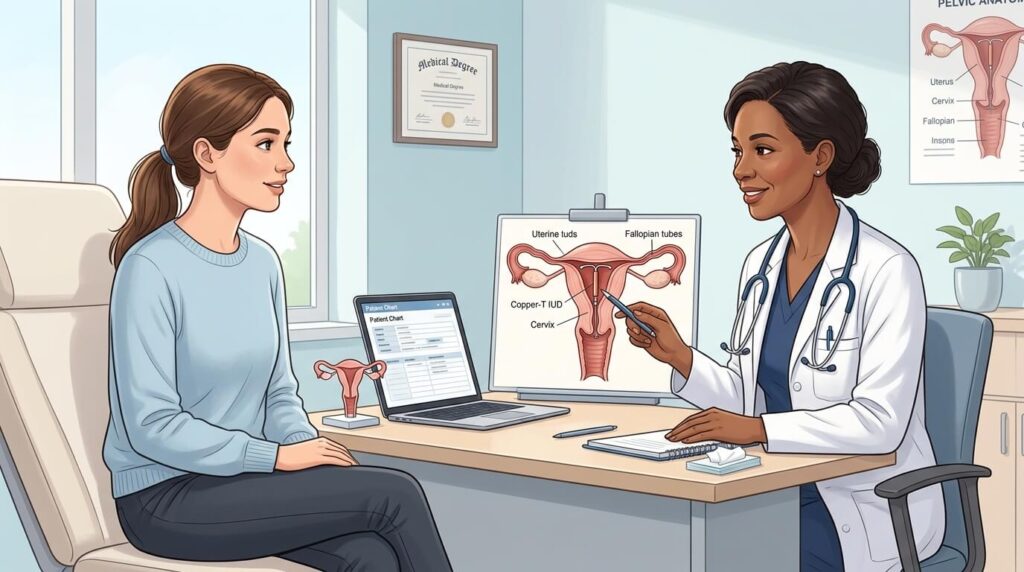
If you’ve got an IUD removal on the calendar, you’ve probably already heard some version of “don’t have sex for a week beforehand.” It’s solid advice — but most clinic websites stop there, without explaining why it matters or what to do if the timing didn’t go as planned.
Here’s the short answer: yes, sex before IUD removal can lead to pregnancy, even though the IUD is still in place and working right up until the moment it’s removed. The risk isn’t from the IUD failing — it’s about what happens in the days after it comes out.
Below, we’ll break down the actual mechanics behind the 7-day guideline, how it differs depending on your IUD type, what to do if you’ve already had unprotected sex, and what’s safe once the device is out.
Medical disclaimer placeholder: This article is for general education and does not replace individualized advice from your OB-GYN or clinician. [Insert reviewing clinician name, credentials, and review date here.]
Why Timing Sex Around IUD Removal Actually Matters
An IUD prevents pregnancy as long as it’s in your uterus. The moment it’s removed, that protection ends immediately — there’s no “grace period” where you’re still covered.
How Long Sperm Can Survive in Your Body
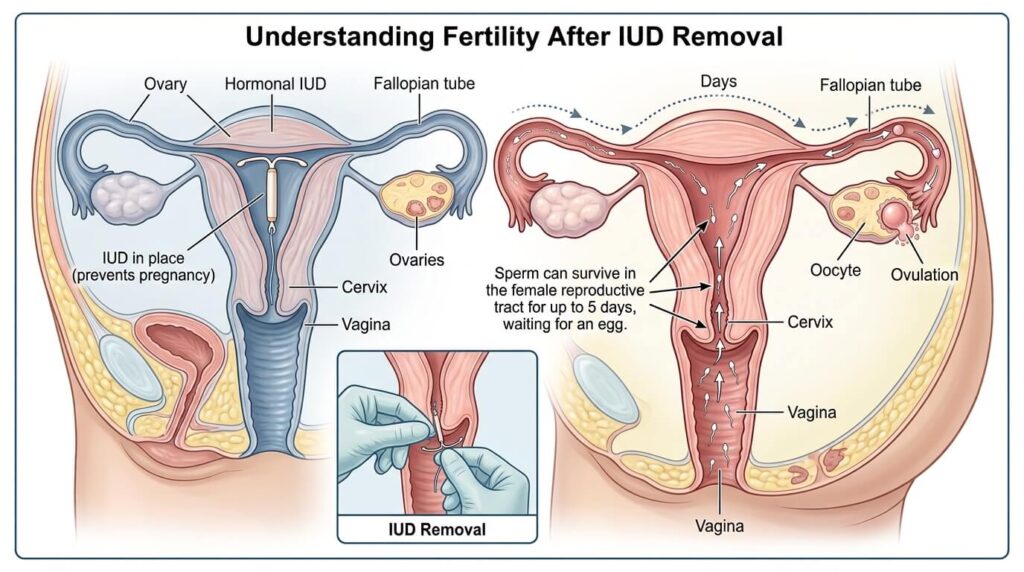
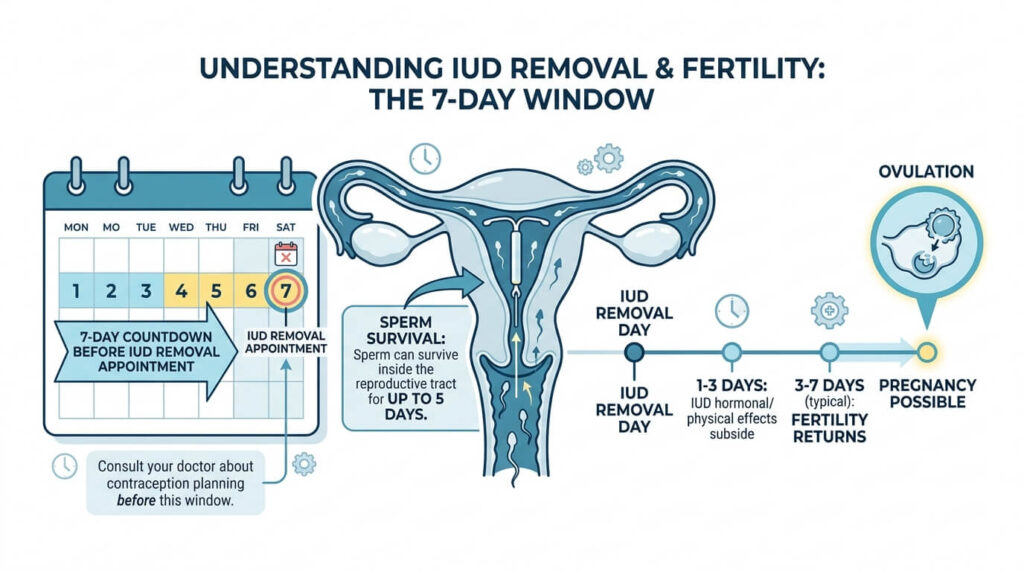
This is the part most explanations skip. Sperm deposited in the reproductive tract can survive for up to five days under the right conditions. So if you have unprotected sex four days before your removal appointment, that sperm could still be viable when your body ovulates afterward — even though the IUD was technically still in place during intercourse.
Why Fertility Can Return the Moment Your IUD Comes Out
Once removed, your fertility doesn’t gradually ramp back up — for most people, it can return right away. There’s no need for your body to “clear” hormones or recover from the device before you’re able to conceive. That’s exactly why providers want any recently deposited sperm to be gone (or non-viable) by the time the IUD comes out.
Takeaway: The risk isn’t a single moment — it’s a window. Sex on day 1 before removal and sex on day 6 before removal carry different levels of risk, which is why providers default to a clean 7-day buffer rather than trying to calculate it precisely.
The 7-Day Rule, Explained sex before iud removal
Why Most Providers Recommend It
Seven days is used because it comfortably covers the maximum sperm survival window (about five days) with a margin of safety, accounting for normal variation in individual cycles and the unpredictability of ovulation timing. It’s a practical guideline, not a strict biological cutoff — your provider may adjust it based on your cycle, contraceptive history, or reason for removal.
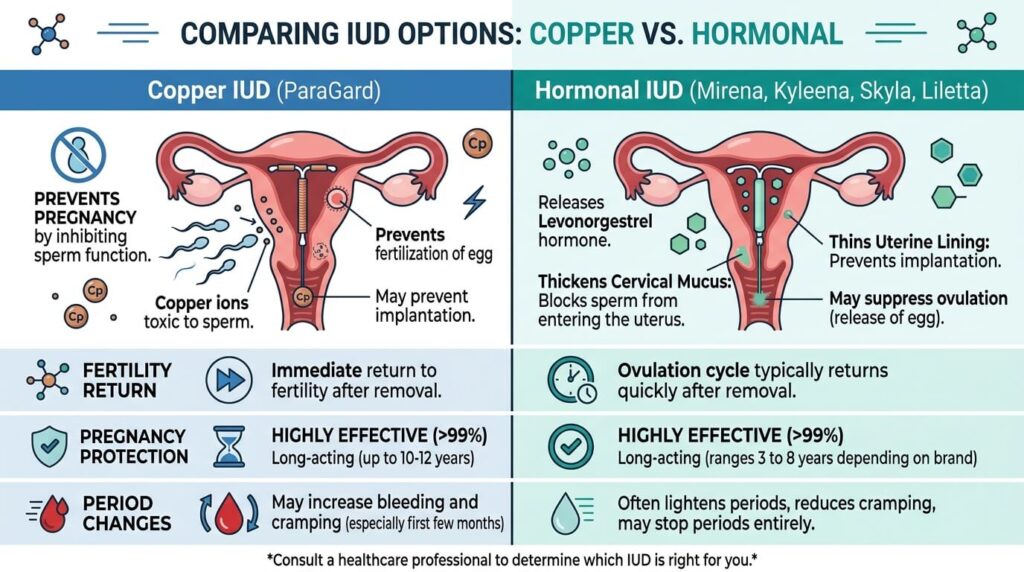
Does It Apply to Both Copper and Hormonal IUDs?
Yes, with a nuance worth understanding:
| Copper IUD (e.g., ParaGard) | Hormonal IUD (e.g., Mirena, Kyleena, Liletta, Skyla) | |
|---|---|---|
| How it prevents pregnancy | Toxic to sperm; no hormones involved | Releases progestin, which can also suppress ovulation in some users |
| Fertility after removal | Tends to return essentially immediately | Also returns quickly, though some users may have briefly suppressed ovulation that takes a cycle or two to normalize |
| Does the 7-day rule still apply? | Yes | Yes — don’t assume hormonal suppression gives you extra buffer; ovulation can resume unpredictably |
Either way, the practical advice is the same: don’t treat either IUD type as giving you “extra” protection in the days right before removal.
What If You’ve Already Had Sex Before Your Appointment?
This is the scenario most patient-education pages skip entirely — but it’s one of the most common reasons people search this topic. If you’ve had unprotected sex within the last few days and your removal is coming up:
- Call your provider’s office before your appointment. Many clinics will simply reschedule, or talk through options with you rather than turning you away.
- Don’t assume you have to cancel. Depending on timing and your personal pregnancy goals, your provider may proceed as planned, especially if you’re not concerned about conceiving.
- Ask about emergency contraception if avoiding pregnancy is a priority and the removal can’t be delayed.
- If you’re planning to get pregnant anyway, this is far less of a concern — talk to your provider about moving up your timeline instead of delaying it.
A licensed provider is the right person to weigh in here, because the actual risk depends on where you are in your cycle, which isn’t something a blog post (or a quick mental calculation) can tell you.
Sex and STI Risk Before Removal (It’s Not Just About Pregnancy)
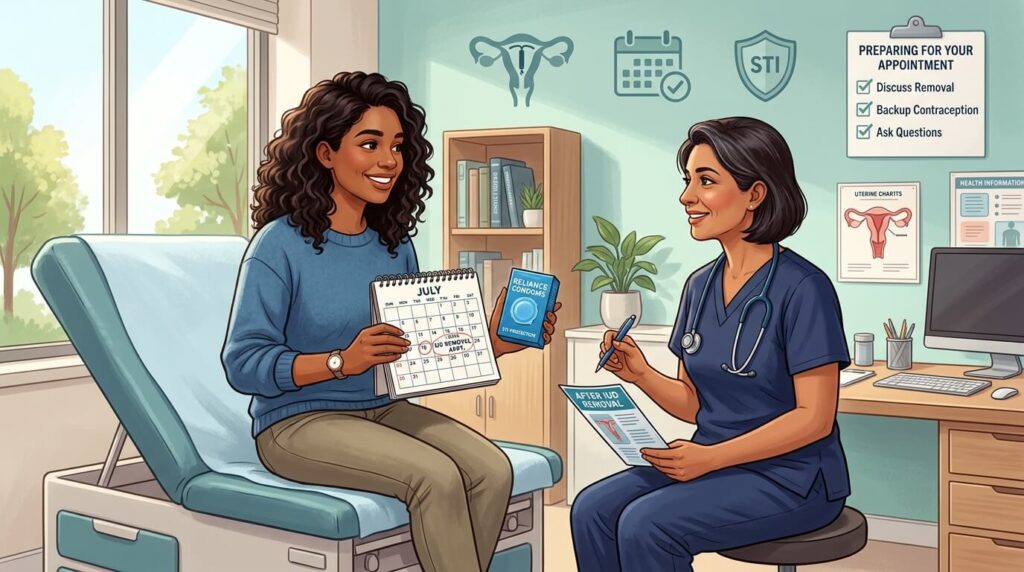
An IUD — copper or hormonal — does not protect against sexually transmitted infections. If pregnancy prevention is the only thing on your radar in the days before removal, it’s worth remembering that unprotected sex still carries STI risk regardless of timing. Using a condom during the pre-removal window addresses both concerns at once: it reduces pregnancy risk and STI exposure, which is one more reason providers often recommend barrier methods rather than abstinence alone during this stretch.
Your Options for the Days Before Removal
Backup Contraception Methods
If full abstinence for 7 days isn’t realistic, condoms (internal or external) are the most commonly recommended backup during this window, since they don’t interact with your existing IUD and can be started or stopped anytime. Other options, like switching to a hormonal method, typically need more lead time to become effective and aren’t a quick fix for a removal appointment that’s days away.
Getting a New IUD at the Same Visit
If you’re removing your IUD only because it’s expired or you want a fresh device — not because you’re trying to conceive — many providers can place a new IUD immediately after removing the old one, in the same visit. This is worth raising with your provider ahead of time, since it sidesteps the whole timing question: there’s no contraceptive gap to manage.
Can You Have Sex Right After IUD Removal?
Physically, yes — there’s no medical reason to wait once the procedure is done, beyond your own comfort if you’re experiencing cramping or spotting. The important distinction is protection, not timing: once the IUD is out, you have no contraceptive coverage unless you’ve arranged a new method (a new IUD, condoms, or another option) before that first encounter.
FAQ: Sex Before IUD Removal
Can you have sex right before getting your IUD removed?
The IUD itself is still effectively preventing pregnancy while in place, but providers generally recommend avoiding unprotected sex for about 7 days beforehand, since sperm can survive long enough to fertilize an egg after the device is removed.
How many days before IUD removal should you stop having sex?
Most clinicians suggest a 7-day window of abstinence or backup contraception (like condoms) before your appointment, unless you’re actively trying to conceive.
What happens if you have unprotected sex before IUD removal and don’t want to get pregnant?
Contact your provider before your appointment. They may reschedule, proceed with additional guidance, or discuss emergency contraception depending on your specific timing.
Can you get pregnant the same day your IUD is removed?
Not from sex that occurs on removal day itself, but pregnancy is possible if you have unprotected sex afterward, since contraceptive protection ends the moment the device is out.
Is the 7-day rule different for copper vs. hormonal IUDs?
No — both types stop providing protection once removed, so the same precaution applies regardless of which kind you have.
Can you have sex immediately after IUD removal?
Yes, physically, but you won’t have contraceptive protection unless you’ve arranged a backup method or new device beforehand.
Does an IUD protect against STIs, so do I still need a condom before removal?
No, IUDs don’t protect against STIs. Using a condom in the days before removal can address both pregnancy prevention and STI risk at the same time.
When to Talk to Your Provider
Every cycle is a little different, and the general guidance here can’t account for your specific health history, the reason for your removal, or where you are in your cycle. If you’re unsure whether recent sexual activity affects your upcoming appointment, the most reliable next step is a quick call to your provider’s office — most clinics field this question regularly and can advise you without judgment.